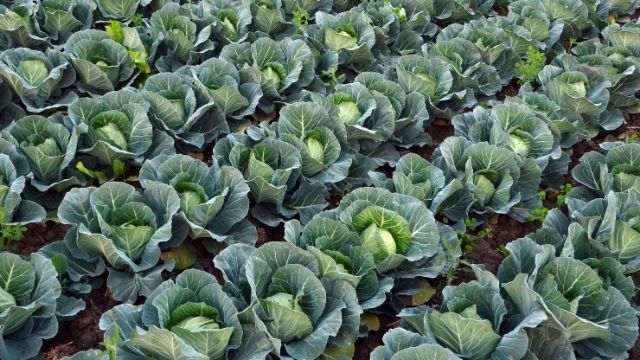
In this article, we give you tips for growing cabbages in Kenya. To get higher yields, you need cabbage heads that are bigger, heavy and compact. They should be free of defects like rots, and its inner color would be cream or white.
To achieve those goals, Follow our tips for successful commercial gardening and observe good agriculture practices (Gaps) for cabbage farming. You will get a guide on doing a survey, choose the market, the best cabbage seed variety to grow and get you advice on crop management, pest and disease control and crop nutrition. Other areas are o harvesting and value addition to reduce food wastage. Using the information, you can predict the costs and profits of farming cabbages in a given piece of land.
Where to grow cabbages
The following are best conditions for cabbage farming when you are selecting your site.
- An altitude of 700 to 2200 meters above sea level.
- Temperatures are 16 to 20 °C.
- The vegetables need at least 500 mm. of rainfall
- Well-drained sandy soils or silty loam soil..
- A soil pH or acidity of 6.- 6.5.The soils must have high organic matter content.
If you are not sure about soil features, carry out a soil test to measure Soil pH and its nutrition.
Land Preparation
Do a soil analysis to determine the blend for your cabbage farm. Cabbages require the basal application of compost and DAP fertilizers. Put 2-3 handful of manure or 8 tons per acre. Each hole needs 10 g or 100 kg (= 11,111 holes x 10 g) per acre.
If the area has low rainfall, use overhead, drip or furrow irrigation methods. Watering will require the use of clean water for proper food hygiene and food standards
Transplanting cabbages
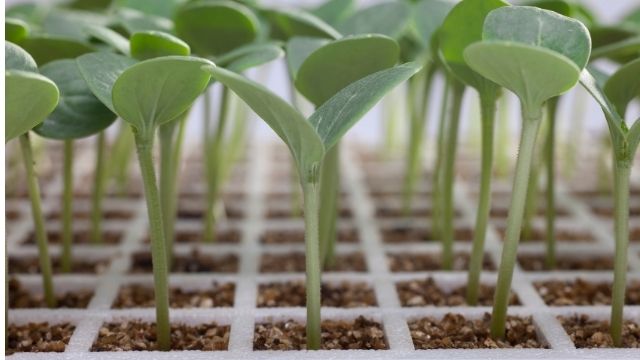
Your cabbage seedlings are ready to transplant after 30 days from germinations. You can choose the best cabbage seeds for your area and establish a seedbed. A cheaper method is to buy certified seedlings from a plant raiser.
The recommended spacing is 45 to 60 cm between plants and 60 cm between rows. The spacing depends on your agroecological zone and the seed company recommendations.
Topdressing
A soil analysis will inform your top dressing needs. The common practice is to apply a nitrogen fertilizer like the CAN or Urea. Do it two times using the placement method for effectiveness.
- In 2-3 weeks’, time after your transplant, apply 10 g per plant (100 kg per acre).
- Do the second at 20 gm per plant (200 kg per acre) once cabbages form heads.
Pest management
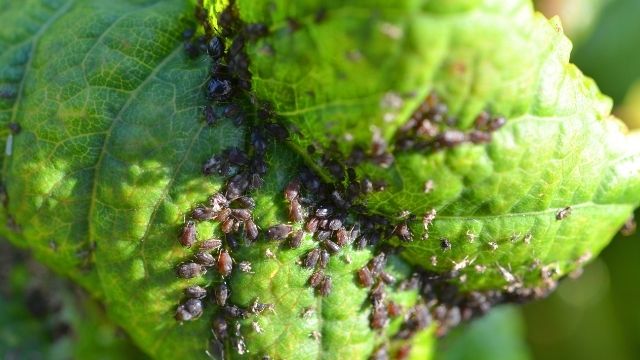
Cabbage attracts several pests that can cost your yields. The common ones you need to manage are the
- Diamondback Moth (DBM)
- Cabbage Sawfly
- Aphids
- Slugs
- Cutworms
You can manage pests using chemicals or organic methods like biopesticides, neem products and natural predators like parasitic wasps.
Disease Control
Cabbage is prone to many diseases that affect the Brassicaceae or Cruciferae family plants. Their infection reduces the quality of produce. The worst ones you need to control are;
- Damping-off
- Bacterial Black Rot
- Black Leg (Dry Rot Canker)
- Ring Spot
- Alternaria Leaf Spot
- Bacterial Soft Rot
- Club Root diseases
Similar to pest management, you can use a range of methods to control cabbage diseases. They include the use of quality planting materials, field hygiene and crop rotation. Others are ploughing and use of chemicals.
Harvesting and marketing
Most cabbage varieties mature after 60 days. They get into the prime stage when heads are firm. If they pass the maturity index, they will crack or split. Cut them at the base and leave inedible leaves to protect and maintain the quality of harvests.
To reduce spoilage, discard the diseased and damaged heads. There are three cabbage grades based on on their head sizes;
- Small < 2kg,
- Medium 3-4 kg
- Large 5kg>.
Pack cabbages in in clean and open crates. To cut evaporation, transport them using covered vehicles.
Where to sell your cabbages in Kenya?
Looking for the best prices for cabbages in Kenya? The institutional consumers like boarding schools and churches offer better market terms and prices. You can also sign contracts with supermarkets and wholesalers or consider to target consumers directly. The other emerging practice among farmers is to join an online farmers and traders forum to advertise your produce.