Key takeaways
- Feed is up to 70 per cent of the cost of raising a pig.
- Growers need about 18 to 20 per cent protein, finishers about 16.
- Weigh every ingredient, because scooping by eye drifts.
- Limestone, salt and a premix are what most homemade rations get wrong.
- Mix two weeks at a time and store sealed, off the floor.
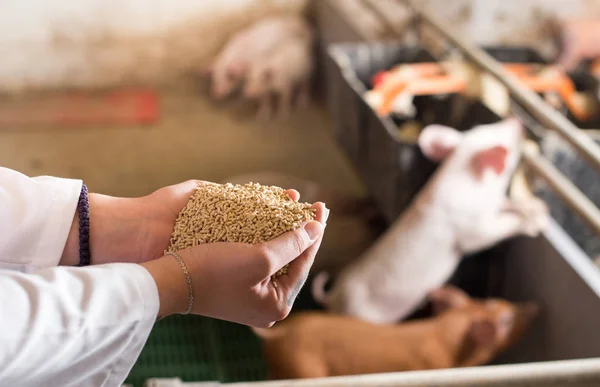
Weigh the ingredients, match the ration to the growth stage, and mix small batches you can store safely.
That single line decides whether pig farming pays. Everything else is detail.
Mixing your own feed cuts that cost and puts you in control of what the animals eat. Farmers who mix well report savings of 30 to 50 per cent against commercial feed.
This article covers what pigs need, which ingredients to use and three tested formulas. It ends with the storage and safety rules that protect the batch.
Why mix your own pig feed
Five reasons, and only the first is about money.
Cost. Feed is the largest line in any pig enterprise. Local grains and by-products cost less than a finished commercial ration.
Control. You decide the protein level and the ingredients. You can lift protein for weaners and ease it back for finishers.
Less waste. Vegetable and fruit trimmings carry vitamins and fibre. Used properly, they replace bought ingredients.
Stage by stage. Piglets, porkers, baconers and breeding stock all need different diets. One bought ration rarely suits all four.
Known inputs. You can see every ingredient that goes into the drum.
Feed is the biggest cost you can actually control.
What a pig actually needs
Five nutrient groups, in this order of importance.
| Nutrient | What it does | Common sources |
|---|---|---|
| Energy | Daily activity and weight gain | Maize, wheat, barley |
| Protein | Muscle development | Soybean meal, fishmeal, sunflower meal |
| Fibre | Digestion and satiety | Wheat bran, rice bran, pollard |
| Minerals | Bone and electrolyte balance | Limestone, bone meal, salt |
| Fats | Feed efficiency and meat quality | Sunflower seed, vegetable oil |
Growers need roughly 18 to 20 per cent protein. Finishers need about 16. Below that, growth slows and you pay for days rather than kilos.
Ingredients worth sourcing
Most of these are available from Kenyan agrodealers and millers.
| Ingredient | What it brings |
|---|---|
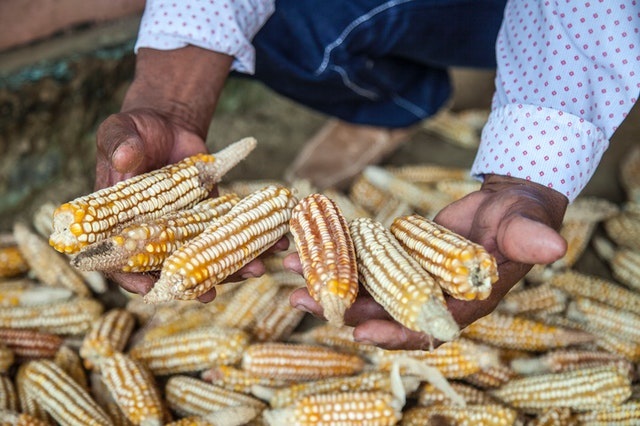
| Maize | The energy base of most rations, easily digested |
| Soybean meal | The main protein source for muscle growth |
| Wheat bran or pollard | Bulk and fibre at low cost |
| Sunflower meal | Protein and healthy fats |
| Skimmed milk or whey | Protein and calcium, best for young pigs |
| Salt | Sodium for electrolyte balance |
| Limestone or bone meal | Calcium for bone development |
Seasonal extras can stretch a ration. Vegetable trimmings, sweet potato vines and acorns all work when they are clean and fresh.
Never feed mouldy grain, meat scraps or swill from unknown kitchens. Swill feeding is restricted in Kenya because of disease risk.
Formula one: grower and finisher
This ration carries pigs from weaner through to market weight.
| Ingredient | Amount |
|---|---|
| Maize | 47.25 kg |
| Soybean meal | 20 kg |
| Wheat bran | 15 kg |
| Sunflower meal | 10 kg |
| Skimmed milk or whey | 5 kg |
| Limestone | 2 kg |
| Salt | 0.5 kg |
| Vitamin and mineral premix | 0.25 kg |
| Total | 100 kg |
That gives roughly 20 per cent protein, 0.76 per cent calcium and 0.5 per cent salt.
Twenty per cent suits growers. Once pigs pass about 60 kg, move 5 kg from soybean meal to maize. Protein drops to around 16 per cent, which is what a finisher needs, and the ration costs less.
Mix the dry ingredients first, in a drum or on a clean slab. Add the milk or whey slowly, turning as you go. Store in a sealed container in a cool, dry place.
Formula two: starter feed for weaners
For piglets coming off the sow.
| Ingredient | Amount |
|---|---|
| Maize | 25.35 kg |
| Soybean meal | 15 kg |
| Wheat bran | 5 kg |
| Sunflower seed | 3 kg |
| Limestone | 1.15 kg |
| Salt | 0.25 kg |
| Vitamin and mineral premix | 0.25 kg |
| Total | 50 kg |
That gives roughly 20.5 per cent protein and 0.87 per cent calcium. A young pig needs both at that level.
Grind the grain and seed finer than you would for older pigs. A young gut cannot handle coarse particles.
Introduce it gradually, alongside what the piglets already know. A sudden change causes scours.
Formula three: breeding sows and boars
For animals you are keeping, not selling.
| Ingredient | Amount |
|---|---|
| Maize | 47 kg |
| Soybean meal | 20 kg |
| Wheat bran | 15 kg |
| Barley | 10 kg |
| Vegetable scraps | 5 kg |
| Limestone | 2.25 kg |
| Salt | 0.5 kg |
| Vitamin and mineral premix | 0.25 kg |
| Total | 100 kg |
That gives roughly 16.5 per cent protein and 0.85 per cent calcium. Breeding stock need less protein than growers and more calcium. A lactating sow draws on her own skeleton.
Mix the dry ingredients, then fold in the vegetable material. Use it within a few days, because the wet portion spoils.
Adjust the quantity fed to the animal’s weight and stage. A sow in late gestation and a dry sow are not on the same ration.
Weigh every ingredient. Scooping by eye is how a formula drifts.
Three things that break a homemade ration
Get these wrong and the rest does not matter.
Salt above 0.5 per cent. Pigs tolerate little more, and salt poisoning follows if water runs short. Weigh it; never scoop it.
Calcium too low. Grain and meal supply almost none. Without limestone at roughly 2 kg per 100 kg, you get weak bones and lame animals.
No premix. Home ingredients do not supply the full vitamin and trace mineral range. Buy a commercial pig premix and follow the rate on the bag.
Add a phosphorus source such as dicalcium phosphate if your premix does not include one. Bone meal also works.
How much to feed, by stage
Start low and build. Pigs waste what they cannot finish.
| Stage | Daily feed |
|---|---|
| Weaners | Start at 200 g, add about 50 g a day |
| Porkers at 14 weeks | About 1.4 kg, split across three meals |
| Baconers | 2.5 to 3 kg, by weight and condition |
| Breeding sows | Varies by stage, more protein in gestation and lactation |
Mixing a batch that stays good comes down to six steps.
- 1Weigh every ingredient. Use a scale, not scoops, every single time.
- 2Grind to the right size. Finer for weaners, coarser for finishers.
- 3Mix the dry ingredients first. Grain, meal and bran, until the colour is even.
- 4Add the wet last. Milk, whey or greens, turning as you pour.
- 5Store sealed and cool. Off the floor and away from the wall.
- 6Mix small and often. Two weeks of feed, never two months.
Aflatoxin is the risk nobody budgets for
This is the one that ruins a batch and the animals with it.
Maize stored damp grows moulds that produce aflatoxin. Pigs are sensitive to it. Contaminated feed reduces growth, damages the liver and can kill.
Buy maize that is dry and clean, and reject any with a musty smell or discoloured grains. Store the mixed feed off the floor, away from walls, in sealed containers.
Mix two weeks of feed at a time. Homemade rations carry no preservatives, so a large batch is a large risk.
What makes homemade feed go wrong
Four failures account for most of it.
The ration is unbalanced, because nobody checked the protein level. The feed spoils, because the batch was too big or the store was damp. The work becomes a burden, because sourcing and grinding take hours. And the quality drifts, because ingredients vary from one purchase to the next.
Each one is manageable. Weigh accurately, mix small batches, buy from a consistent supplier and watch the animals.
Condition is your feedback. Slow growth, dull coats and loose dung say the ration needs work.
The point: control the cost without losing the animal
Homemade feed works when it is weighed, balanced and stored properly.
Start with one formula and one group of pigs. Record what you mix, what they eat and what they gain. Adjust from your own numbers, not from an article.
Done carelessly, homemade feed costs more than it saves, in days to market and in veterinary bills.
Costing a pig enterprise?
Feed is 70 per cent of the cost, so it is 70 per cent of the decision.
Agcenture Consulting advises farmers, agribusinesses and lenders on agricultural finance, farm economics and market access across Kenya.
If you are sizing a piggery, talk to Agcenture.
Written by Agcenture Consulting
We advise farmers, agribusinesses and lenders on agricultural finance, farm economics and market access across Kenya. Our guides use public sources and clearly labelled assumptions.
Questions readers ask
How much can I save by mixing my own pig feed?
Farmers who mix well report 30 to 50 per cent against commercial feed. Savings depend on what you pay for maize and soybean meal.
What protein level do pigs need?
Weaners and growers need about 18 to 20 per cent. Finishers need about 16, and breeding stock about 16.5.
Can I feed kitchen waste to pigs?
Clean vegetable and fruit trimmings are fine. Swill containing meat is restricted in Kenya because of disease risk.
How long does homemade feed keep?
Mix about two weeks at a time. There are no preservatives, so large batches spoil before they are used.
Why is aflatoxin a problem in pig feed?
Damp maize grows moulds that produce it. Pigs are sensitive, and contaminated feed causes poor growth and liver damage.
Do I need a mineral premix?
Yes. Home ingredients miss the full vitamin and trace mineral range. Buy a pig premix and follow the bag rate.