- 1. Why Kei-apple Living Fences
- 2. Understanding Kayaba (Dovyalis caffra)
- 3. Cost of planting Kayaba fence per 100 Metres
- 4. Optimized Spacing and Layout
- 5. Step-by-Step Establishment Guide
- 6. Long-term Management and Trimming
- 7. Seedling Acquisition and Self-Propagation
- 8. Limitations When Kayaba is the Wrong Choice
- 9 FAQs
- 10. Final Thoughts
1. Why Kei-apple Living Fences
For the Kenyan landowner, securing a boundary is more than a legal formality, it is a critical investment in propery value. While many initially turn to barbed wire or wire mesh for its “instant” results, veteran farmers have long observed that wire is a depreciating asset. Over a five-year horizon, wire rusts, cedar posts rot or are stolen for firewood, and high-tensile strands are easily cut by trespassers.The Kayaba (Kei Apple) fence, by contrast, is a biological barrier that grows stronger, denser, and more intimidating with every passing season.
Kei-apple fence is a permanent, living wall of thorns that provides absolute security against cattle, goats, and human intruders. When you factor in the rising costs of industrial materials, a Kayaba fence remains the most cost-effective long-term solution for Kenyan farmers, providing a nearly impenetrable perimeter that outlives the person who planted it.
2. Understanding Kayaba (Dovyalis caffra)
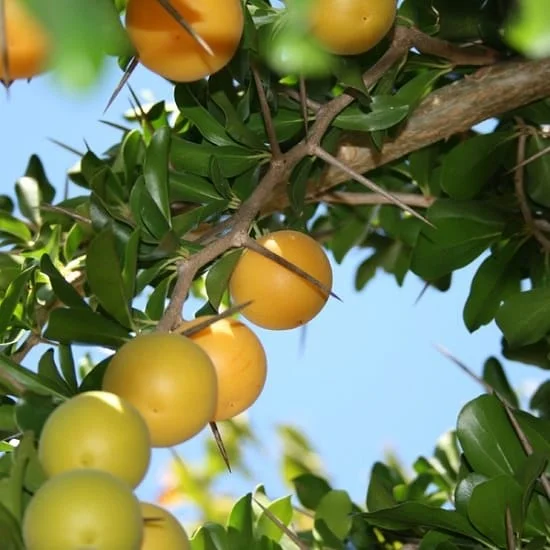
Known locally across the country as Kayaba or Kayapa, this hardy shrub is botanically classified as Dovyalis caffra. Originally from Southern Africa, it has been the backbone of Kenyan farm boundaries for decades due to its resilience and sharp, 6cm thorns.
A critical technical point for any farmer is that Kayaba is dioecious, meaning individual plants are either male or female. If your sole objective is security, the sex of the plant is irrelevant. However, a senior consultant will always advise you to consider the “food security” secondary benefit. The female plants produce yellow, apricot-sized kei-apple fruit that is exceptionally high in Vitamin C. To ensure pollination for a harvestable crop ideal for farm-made jams or as a nutritious snack for herding children we recommend a ratio of one male plant for every ten females. While most nurseries sell unsexed seedlings, maintaining a high density in your line usually ensures this natural balance is met by chance.
Several characteristics make Kayaba one of Kenya’s best live fencing species.
- Extremely sharp, dense thorns provide excellent security.
- Drought tolerant once established.
- Long-lived with relatively low maintenance.
- Difficult to steal or vandalize.
- Produces edible fruits rich in Vitamin C.
- Provides habitat for beneficial birds while acting as a windbreak.
One important fact to understand is that Kayaba is dioecious, meaning individual plants are either male or female. Female plants only produce fruit when a male plant is nearby for pollination.
If your objective is simply to establish a secure hedge, the male-to-female ratio is not important because both produce equally effective thorny barriers. However, if you want fruit production, aim for approximately one male plant for every ten female plants.
3. Cost of planting Kayaba fence per 100 Metres
From a technical field perspective, the economic argument for Kayaba is overwhelming. We have synthesized current market data from nurseries in Kiambu and Embu to provide the following breakdown.
Estimated Establishment Costs for 100m Kayaba Fence
| Item | Estimated Cost (KSh) | Technical Notes |
| Seedlings (200–333 pcs) | 600 – 4,995 | Based on 30–50cm spacing |
| Seedling Price | 3 – 15 | Lower prices found at KEFRI or community groups |
| Land Preparation | 1,500 – 3,000 | Clearing a 0.5m strip and digging |
| Planting Labor | 500 – 1,000 | Standard agricultural day rate |
| Total Initial Estimate | KSh 2,600 – 8,995 | Investment for 100 linear metres |
The Competitive Contrast
Compare these figures to the cost of 100 metres of standard barbed wire fencing. Between high-gauge wire, treated wooden or concrete posts, staples, and specialized labor, a 100m wire fence currently costs between KSh 15,000 and KSh 25,000. While the wire is faster to install, it offers zero “theft-proof” value (posts are frequently stolen in many regions) and requires replacement within a decade. Kayaba is roughly 60% cheaper to start and lasts for generations.
4. Optimized Spacing and Layout
The integrity of your barrier depends entirely on the initial layout. Agcenture research, recommends two specific strategies based on your security needs:
- Single Row: Seedlings are spaced 30–50 cm apart in a straight line. This is ideal for internal farm divisions or when working with a limited budget. With proper rainfall, a single row typically “closes” into a solid wall within 3 to 5 years.
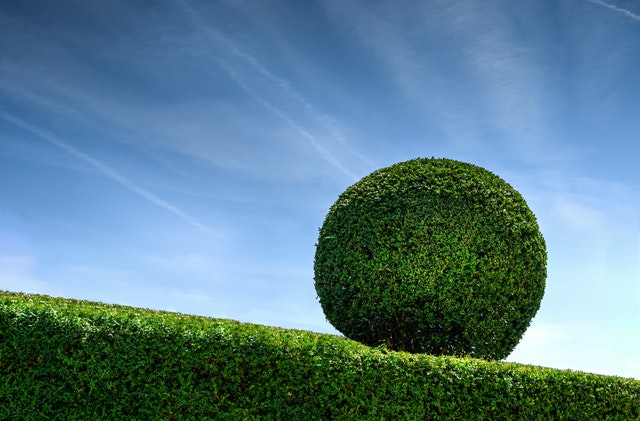
- Double Staggered Row: This is the professional standard for road-facing boundaries or livestock containment. You plant two parallel rows 30 cm apart, offsetting the plants in a “zigzag” pattern so that no gap lines up. While this doubles your seedling requirement, it creates a thicker, more impenetrable base much faster.
5. Step-by-Step Establishment Guide
Field experience shows that most fence failures occur in the first six months. Follow these technical steps to ensure a 95%+ survival rate.
- Marking the Line: Use a string and pegs to mark a permanent boundary. A mature Kayaba fence is nearly impossible to relocate, so verify your coordinates with the Ministry of Lands or local surveyors first.
- Strip Clearing: Clear a half-metre wide strip. This is vital. Young Kayaba is highly sensitive; weed competition is the #1 killer of seedlings in Kenya. If grass is allowed to choke the young plants, they will remain stunted for years.
- Digging: Dig holes 30cm x 30cm. This size ensures the soil is loose enough for young roots to aerate and expand rapidly.
- Fertilization: Mix the topsoil with a handful of well-rotted manure or compost. Avoid fresh manure, which can “burn” the delicate nursery roots.
- Planting Technique: Carefully remove the plastic sleeve. Set the plant at the exact depth it sat in the bag. Firm the soil with your boots to remove air pockets and water immediately.
- Mulching: Apply a thick layer of dry grass or crop residue along the strip. This is the single most important factor for survival. Mulch suppresses weeds and preserves soil moisture during the first dry season.
- Initial Protection: Young Kayaba is a “candy” for goats before the thorns harden. Use temporary thorn branches or a single strand of cheap wire to protect the line for the first 12 months.
6. Long-term Management and Trimming
A Kayaba fence left unmanaged becomes a row of leggy, thin shrubs. You want a wall, not a tree line.
Year 1: Gapping Up
- During the first “Short Rains” following your main planting, identify any dead seedlings (usually 5-10%). Replace them immediately—a process called “gapping up.” This ensures no holes exist in the future barrier.
Year 2: Tip-Cutting
- Once the plants reach about 60cm, use a sharp panga to cut the vertical leading tips. This forces the plant to branch laterally (sideways), filling the gaps between the stems.
- Cutting the growing tips encourages lateral branching, producing the dense hedge that makes Kayaba so effective. Without pruning, the plants become tall and sparse, leaving gaps underneath that livestock can exploit.
Year 3 onwards: Bi-annual Trimming
- Trim the fence twice a year, ideally at the end of the “Long Rains” (May/June) and “Short Rains” (December).
- Constant pruning keeps the thorns dense and the base thick. If you skip this for two years, the fence will develop “leggy” gaps at the bottom that small livestock can easily crawl through.
- Maintain a height of approximately 1.5–2 metres for a thick, manageable barrier.
7. Seedling Acquisition and Self-Propagation
We recommend sourcing your material from established nurseries to ensure standardized height and health. Buy and plant at the start of the long rains (March/April) or short rains (October/November) to ensure the highest survival rate for your new fence.
Current Verified Seedling Sources (2024/25)
| County | Nursery Source Type | Price per Seedling (KSh) |
|---|---|---|
| Kiambu | Private/Commercial Roadside | 10 – 15 |
| Embu | Ministry of Agriculture / Groups | 3 – 8 |
| Uasin Gishu | KEFRI / Private | 5 – 12 |
Key Buying Tips for Buying Best Kei Apple seedling
- Bulk Discounts: Local regional nurseries often offer bulk prices as low as KSh 4 per seedling for large orders.
- Online Options: If local supply is low, digital platforms like Mkulima Online list seedlings, though prices are significantly higher, ranging from KSh 25 to KSh 348 depending on size and delivery.
Self-Propagation
For large-scale acreage, you can raise your own. Collect ripe fruit from an established hedge, remove the pulp, and sow the seeds immediately in sand-heavy soil. Fresh seed generally produces the best results.
Certified seeds can be purchased directly from the Kenya Forest Service (KFS) headquarters in Muguga.
Germination typically takes 18–20 days. While this is the cheapest method, remember that seeds take longer to reach planting size than nursery-bought “wildings” or potted seedlings.
Another cheaper option is to transplant naturally occurring seedlings (wildings) from beneath mature hedges. You can also successfully sow seeds directly into the fence line during heavy rains, though this requires very diligent weeding
8. Limitations When Kayaba is the Wrong Choice
Despite its benefits, Kayaba is not a universal solution:
- Safety: The thorns are brutal. Never plant it along a path that children use daily.
- Growth Speed: It is a slow-growth solution. If you need security tonight, install a cheap wire fence and plant Kayaba behind it as the long-term replacement.
- Rainfall: If your area receives less than 600mm of annual rainfall, Kayaba will struggle without permanent irrigation during its first two years
9 FAQs
How far apart should kayaba be planted?
For a standard security hedge, seedlings should be planted 30–50 cm apart. For high-security road boundaries, use a double staggered row with 30 cm between plants.
How long does a kayaba fence take to close?
With consistent trimming and average rainfall, a single row will close into a solid barrier within 3 to 5 years. A double staggered row can close as early as year 3
Can you eat kei apple fruit?
Yes. The fruit is edible and very high in Vitamin C. It is tart and acidic, making it excellent for jams or as a dietary supplement for farm families.
Is kayaba the same as kei apple?
Yes. Dovyalis caffra is known locally in Kenya as Kayaba or Kayapa and internationally as the Kei Apple.
Can Kayaba survive drought?
Once established, Kayaba is fairly drought tolerant. However, young plants require adequate moisture during their first one to two years to develop strong root systems.
10. Final Thoughts
A Kayaba fence is not the fastest way to secure a farm, but it is one of the most durable and cost-effective. With proper spacing, timely planting, and consistent pruning, a living hedge can provide decades of protection while adding biodiversity, edible fruit, and lasting value to your land. For Kenyan farmers seeking a permanent, low-maintenance boundary, few fencing options match the long-term performance of Kayaba.
For more detailed advice on boundary management, see our guide on the Best fencing plants in Kenya. If you are interested in the nutritional side of your farm, explore our deep dive into Fruit trees farming in Kenya. Our guide on Top ornamental trees in Kenya can help you add aesthetic value to your secure homestead.