In this article
Key takeaways
- Build east to west, with side walls up to 3 feet and mesh above. Cement the floor.
- Plan 2 sq ft a layer and 1 sq ft a broiler on deep litter. Cages hold far more birds per square metre.
- A 128-bird cage set lists at KSh 39,000, with nipple drinkers and feeders included. That is about KSh 305 a bird.
- Fit one nipple drinker per 10 to 12 birds, fed from a tank about 2 m high.
- Biosecurity starts at the door: footbath, overalls, a 14-day quarantine and a mesh fence.
- Solar lights and movable pens cut running costs. Solar heating needs far bigger batteries.
A modern chicken house is dry, ventilated and easy to clean. It has closed watering and a biosecure door. Cages suit large layer flocks. Deep litter suits broilers and small layer flocks. Movable pens suit improved kienyeji. Budget about KSh 250,000 for a simple deep-litter house for 1,000 layers. Cages add about KSh 350 a bird.
Modern Chicken House in Kenya: Why the Cheapest Build Is Rarely the Cheapest to Run
Cages cost about KSh 350 more a bird than a floor, says Kenchic’s company vet in The Standard. Yet he adds that one person can run 10,000 caged layers. The cheaper floor needs more hands.
That is the trade in every housing choice. A house sets your labour, your disease risk, your egg quality and your market. It is hard to change once the roof is on.
This guide covers the whole build. You will see how to site and build the house. You will see how to choose between cages, deep litter and movable pens. You will see what drinkers, feeders and trays to buy. You will see how to protect the flock, and which green options pay.
Pick your system for your buyer first. Then build the house to match it.
Prices come from Kenyan suppliers and press reports. Some are older than 2026, so we say so. Get two quotes before you pay.
Who Buys Your Eggs and Meat? Demand for Modern Housing
Start with the market, because it picks your system. In October 2025, CS Mutahi Kagwe said Kenya imports about 5 billion eggs a year (The Star). Local output is near 4 billion. Demand is near 9 billion.
Kenya had about 31 million poultry in a 2022 estimate, cited by The Standard. Indigenous birds made up 75 per cent. Broilers and layers made up 22 per cent.
Some buyers now ask how the hen lived. In March 2022, one leading supermarket franchise pledged to sell only cage-free eggs. Kempinski Hotels set a goal of 100 per cent cage-free eggs by 2025, as The Standard reported.
That splits the market in two. Large buyers and traders want volume at a low price, and cages deliver it. Hotels and some retailers pay for welfare claims, and cage-free systems deliver those.
Ask your first three buyers what they want before you choose.
Cages, Deep Litter or Free Range: Choose Your System First
Housing systems by bird type
| Feature | Layers | Broilers | Kienyeji |
|---|---|---|---|
| System | Cages or deep litter | Deep litter | Movable pens |
| Litter space | 2 sq ft a bird | 1 sq ft a bird | 0.2 m2 a bird |
| Birds per m2 | About 5 | About 11 | About 5 |
| Cage space | 450 cm2 a bird | Not used | Not used |
| Why | Clean eggs, less labour | Heavy birds need litter | Foraging, premium price |
Litter space is from the Nation checklist. Cage space is from Kenchic. Movable pens are from IITA PROPAS. Birds per m2 are our conversion.
Broilers are normally raised on litter, not in cages. Heavy birds on wire floors risk breast blisters and foot damage. Kenyan broiler houses are floor systems for that reason.
How the layer systems compare
Battery cages against deep litter for layers
| Factor | Battery cages | Deep litter |
|---|---|---|
| Birds on 300 m2 | 6,000 to 8,000 | 1,800 |
| Extra cost | About KSh 350 a bird to convert a floor system | Base system |
| Egg quality | Sloped floor rolls eggs forward, so they stay cleaner | Floor eggs can spoil within days |
| Disease | Fewer manure-borne infections. Mortality 1 to 2 per cent lower. | Contaminated boots and clothes breach biosecurity easily |
| Labour | One person for 10,000 birds. Manure removal is heavy work. | More labour per bird |
| Welfare | Birds cannot stretch, flap or nest. Some countries ban cages. | More freedom, but more feather pecking and feed spillage |
Source: Dr Watson Messo, Kenchic, in The Standard, 11 October 2025.
Neither wins everywhere. Cages win on labour and egg cleanliness at scale. Deep litter wins when capital is short, flocks are small or buyers pay for cage-free claims.
Site and Construction: Build It Once and Build It Right
The Nation checklist gives a clear brief. Build in an isolated spot and fence it. Clear vegetation within 3 to 5 m of the house to deter rodents. Keep the feed store separate and put a footbath at the door.
Orientation
Run the long axis east to west. That limits direct sun on the walls and keeps birds cooler.
Walls and mesh
Keep the solid side wall to about 3 feet on the long sides. Cover the rest with small-gauge wire mesh.
Floor
Use cement. It is easier to clean and keeps rodents out.
Roof and curtains
Use a pitched, reflective roof with overlaps. Fit curtains you can raise from the top when warm and close when cold.
Keep the house narrow. A Standard checklist says an open-sided, naturally ventilated house should not exceed 10 m wide. It puts wall height at 2 to 3 m at least. It also says no bird should walk more than 1 m to a feeder or drinker.
Cold nights need curtains. Never close them fully, because chicks can suffocate without ventilation.
Floor area and building cost by flock size
| Flock | Layers, litter | Broilers, litter | Kienyeji, movable |
|---|---|---|---|
| 500 birds | 93 m2, KSh 125,000 | 46 m2, KSh 60,000 | 100 m2 |
| 1,000 birds | 186 m2, KSh 250,000 | 93 m2, KSh 125,000 | 200 m2 |
| 2,000 birds | 372 m2, KSh 500,000 | 186 m2, KSh 250,000 | 400 m2 |
| 5,000 birds | 929 m2, KSh 1,250,000 | 464 m2, KSh 625,000 | 1,000 m2 |
Layers use 2 sq ft a bird, broilers 1 sq ft and movable pens 0.2 m2. Building cost uses KSh 250,000 for 1,000 layers, from The Standard. That is about KSh 1,346 a m2 for a simple open-sided house. These are estimates, so confirm with a builder.
That figure covers iron sheets, stones, cement, sand, murram, poles, wire net and labour. Costs have risen since, so expect more.
Cages need far less floor. Kenchic’s range of 6,000 to 8,000 layers on 300 m2 implies about 43 m2 for 1,000 layers, before aisles and egg rooms.
Layer Cages in Kenya: A-Type, H-Type and What They Cost
Cages stack hens in tiers over a sloped wire floor. Eggs roll forward out of the hen’s reach. Each compartment measures 60 by 45 by 120 cm. It holds 4 to 5 hens, with 450 cm2 a bird, says Kenchic.
Layer cage sets listed by EcoChicks Poultry
| Cage set | Birds | Listed price | Price a bird |
|---|---|---|---|
| A-type | 96 | KSh 39,000 | KSh 406 |
| A-type, 4 tiers, double-sided | 128 | KSh 39,000 | KSh 305 |
| H-type | 128 | KSh 45,000 | KSh 352 |
Source: EcoChicks price page and 128-layer listing, 2026. The 128-bird set includes stainless nipple drinkers, PVC water pipes and PVC feeder troughs. Ask what comes with the A-type and H-type sets.
For 1,000 layers you need 8 sets of 128 birds, which is 1,024 places. At the listed prices that is KSh 312,000 for the 128-bird set or KSh 360,000 for H-type sets.
A-type cages are cheaper and simpler. H-type cages are taller and more automated, so they suit large stacked houses. Both use galvanised wire. Check the coating before you buy.
What to check before you buy a cage set
Cage buying checklist
| Check | Why it matters |
|---|---|
| What is included | The 128-bird set lists nipple drinkers, PVC water pipes, feeder troughs, connectors and clips. Compare sets on this basis. |
| Capacity and tiers | Count real hen places per cell and per tier. A 4-tier double-sided set holds 128 hens. |
| Coating | Ask for galvanised wire and metal legs, as EcoChicks lists. Rust shortens cage life. |
| Footprint | One listing gives a 128-bird set as about 7 by 9 by 7 ft. Plan aisles for feeding, egg collection and cleaning. |
| After-sales | EcoChicks lists a warranty, spare parts and technical support. Ask for the terms in writing. |
| Delivery and assembly | Confirm delivery to your county and who assembles the set. |
Based on the EcoChicks 128-layer listing. The footprint comes from a separate listing, so confirm it.
What cages do for your numbers
At 1,000 layers, cages add about KSh 350,000 on top of a house. Our layers guide assumes one worker per 500 layers. On litter, 1,000 layers need two workers. In cages, Kenchic’s vet says one person can manage far more.
Say cages let you drop one worker at KSh 9,000 a month. You save KSh 108,000 a year. The KSh 350,000 premium then pays back in about 3.2 years on labour alone. At 500 layers, you need one worker either way, so labour does not repay the cages.
That is our estimate, not a quote. It ignores cleaner eggs, lower mortality and the manure work cages create.
Cages suit you if
- 1You keep 1,000 layers or more
- 2Your buyers are traders and shops
- 3Labour is your tightest cost
- 4You can handle manure daily
Choose litter if
- 1You keep under 500 layers
- 2Capital is short
- 3Your buyers want cage-free
- 4You value welfare claims
Broilers do not use cages. Keep them on dry litter at 1 sq ft a bird. Read our broiler farming guide.
Nipple Drinkers, Feeders, Trays and Nests: The Equipment List
Nipple drinkers are closed. Water stays in the pipe until a bird pecks the nipple. That cuts contamination, says Kenchic vet Watson Messo. They also keep litter dry, which cuts coccidiosis risk.
Watering rules of thumb
| Rule | Guide | Source |
|---|---|---|
| Birds per nipple | 10 to 12 broilers. 8 to 10 breeders. | Cobb and Standard Media |
| Nipple spacing | No more than 35 cm apart | Standard Media |
| Header tank height | About 2 m (7 feet) above the floor | Standard Media |
| Line height | Birds drink with feet flat, necks slightly raised. Raise the line as they grow. | Cobb |
| Pressure | At least 2 bar. Water in the drip cups means too high. | Cobb |
| Hot weather | Flush the lines at least 3 times a day above 25 degrees C | Cobb |
Cobb is a broiler breeder, so check your own breed guide for layers.
For 1,000 birds, that is 84 to 100 nipples. One plastic nipple drinker lists at KSh 110 on Jumia. Nipples alone then cost about KSh 9,240 to KSh 11,000. Add pipes, drip cups, a tank and a pressure fitting.
Equipment guide and prices
| Item | Guide | Price |
|---|---|---|
| Nipple drinker, plastic | 1 per 10 to 12 birds | KSh 110 each |
| Bell drinker, manual | Small flocks and chicks | KSh 400 to 500 |
| Bell drinker, automatic | Small flocks | KSh 1,500 to 2,000 |
| Chick tray | 20 per 1,000 chicks | KSh 380 |
| Manual drinker, chicks | 20 per 1,000 chicks | KSh 320 |
| Tube feeder, manual | 20 per 1,000 chicks | KSh 800 |
| Charcoal jiko, brooder | 4 per 1,000 chicks | KSh 1,500 |
| PVC feed trough, cage | 3.84 m a piece, over 60 kg load | Included in the cage set |
Chick equipment prices come from a Standard Media guide for 1,000 birds. They are older than 2026. Bell drinker prices are from Standard Media. Jumia and EcoChicks are linked above.
We could not verify a reliable KSh price for plastic egg trays, so ask your supplier. Buy stackable trays you can wash and disinfect. Cardboard trays are hard to clean.
Layers on litter also need nest boxes. IITA’s movable layer pens add 0.03 m2 of nest box a bird (IITA PROPAS). Add perches, and keep nest boxes dry and dark.
For brooding gear, read our chick brooding guide. For heat, see heat lamp alternatives.
Broiler House: Density, Litter, Water and Equipment
Broilers sell fast. Kenchic’s vet puts the cycle at 34 to 36 days. His Standard guide targets 1.65 to 1.75 kg at 35 days. That is 180 to 200 g in week one. Dry litter and good airflow must hold that growth.
Density is where the sources disagree. Pick your figure by how well your house ventilates.
Broiler stocking density, three sources
| Source | Density | Birds a m2 | Floor for 1,000 birds |
|---|---|---|---|
| Nation checklist | 1 sq ft a bird | 11 | 93 m2 |
| Standard yield guide | 30 kg a m2, at 1.7 kg a bird | 18 | 57 m2 |
| BioVision, 4 to 7 weeks | 25 birds a m2 | 25 | 40 m2 |
Sources: Nation, The Standard and BioVision Africa Trust. Kenchic’s vet gives 1 sq ft in one article and 22 birds a m2 in another, so his own articles differ.
Start near 11 birds a m2 if your house relies on natural ventilation. Go denser only with strong cross-ventilation or fans. That is our advice, not a source rule. Heat and ammonia are what punish crowding.
Broiler house checklist
| Item | Guide | Source |
|---|---|---|
| Width and height | Up to 10 m wide. Walls 2 to 3 m high. | Standard |
| Side walls | 3 ft solid, then wire mesh, plus curtains | Standard |
| Litter | Clean wood shavings, 2 to 4 inches. Keep it dry. | Standard |
| First feeders | 1 supplementary tray per 100 chicks | Standard |
| First drinkers | Mini drinkers, then bell drinkers at 2 weeks | Standard |
| Nipple drinkers | 10 to 12 birds a nipple on high-flow lines | Cobb |
| Catching | Blue or green light calms the birds | Standard |
| Pest control | Rat bait stations and a lockable gate | Standard |
Check the full breed guide for your broiler line.
Nipple flow rate for broilers
| Age | Flow in ml a minute |
|---|---|
| 0 to 7 days | 40 |
| 8 to 14 days | 50 |
| 15 to 21 days | 60 |
| 22 to 28 days | 70 |
| 29 to 35 days | 90 |
Source: Cobb nipple drinker poster. Flush the lines at least 3 times a day when water passes 25 degrees C.
Heat for the first weeks matters as much as the house. Use our brooding guide for temperatures, and our broiler farming guide for costs.
Improved Kienyeji House: Semi-Intensive Space, Perches and Nests
Improved kienyeji need a shelter at night and room to forage by day. The Standard guide to kienyeji housing gives clear numbers for the house.
Kienyeji house specification
| Item | Guide | Source |
|---|---|---|
| Floor, 1 to 10 weeks | 10 birds a m2 on deep litter | Standard |
| Floor, 11 to 18 weeks | 8 birds a m2 | Standard |
| Floor, 19 to 78 weeks | 5 birds a m2 | Standard |
| Perches | 1 m of perch for 5 adult birds. Rounded sticks. | Standard |
| Perch size | About 5 cm across, at least 30 cm off the ground | Infonet Biovision |
| Nests | 1 nest for 5 hens, in place by 18 weeks. Dark, off the ground. | Standard |
| Run, confined | About 4 m2 for each adult indigenous bird | Infonet Biovision |
| Floor type | Raised or slatted. Concrete if you disinfect. | Standard |
| Ventilation | Openings on both sides and a ridge or roof gap. No draughts. | Standard |
| Site | Clear grass 3 m around. Keep 500 m to 1 km from other poultry premises. | Standard |
| Litter | Fresh litter at least once a week | Infonet Biovision |
Run space varies a lot by system. IITA movable pens use 0.2 m2 a bird as night shelter only.
Take a flock of 200 adult birds. On the 5 birds a m2 rule, the house needs 40 m2. Allow 40 m of perch and about 32 nests for 160 hens. A confined run at 4 m2 a bird is 800 m2, about 0.2 ha.
Folds and movable shelters
BioVision describes a fold for free-range birds. It measures 3.5 m by 1.5 m by 1.5 m and holds 10 to 15 birds. One third is roofed and the rest is wire-mesh enclosed. Move it daily to fresh ground. For larger flocks, use the IITA movable shed from the green section below.
Naked-neck birds shed heat well, says a Standard writer on climate, so they suit hot zones. Our improved kienyeji guide covers breeds and costs.
Biosecurity: One Door, Two Zones and a 14-Day Rule
Kenchic’s vet says contaminated feet and clothes breach a house easily (The Standard). Biosecurity shuts that door.
KALRO sets out the basics. Put foot baths and vehicle baths with disinfectant at the entrance. Restrict people and vehicles. Give visitors overalls and footwear. Wash hands before and after you handle birds or eggs.
Clean zone and dirty zone
| Zone | What belongs there | Rule |
|---|---|---|
| Clean zone | Birds, feed store, house tools | Overalls and boots stay here. Move from clean to dirty areas, never back. |
| Dirty zone | Gate, public road side, manure pile, dead-bird pit | Visitors and vehicles stop here. Disinfect before they go further. |
Clean-to-dirty flow is from KALRO. The two zone names are ours.
- 1Fence the site. Use wire mesh to keep out dogs, wild birds and strangers.
- 2Put a footbath at every house door. Use a poultry-approved disinfectant and follow the label.
- 3Quarantine for 14 days. KALRO says to hold new birds, and birds back from shows, for 14 days.
- 4Separate species and ages. Do not mix layers, broilers and kienyeji in one house.
- 5Clear the ground. Keep vegetation back 3 to 5 m and store feed outside the house.
Vaccinate on your hatchery card and a vet’s plan. Our guide on why chicks die covers the early weeks.
Green Ideas for Your Chicken House: Solar, Movable Pens and Manure
Solar lighting
A Berkeley Lab study at an off-grid broiler farm in Mai Mahiu lit three houses of 3,000 birds each. Solar LEDs gave about twice the light of kerosene on under half the power. Yields did not suffer. The LED system paid back in 1.5 years (Lumina Project, 2010).
That was one farm and 35 days, and it did not test layers. The study notes that egg-layer lighting needs more research. It still shows what LEDs can do.
A farmer in Kisumu fitted a solar panel and lamps to his coop. He says solar removes monthly bills and protects him from outages (Nation).
Size the system to the load. Sun King lists 10 W for a basic bulb and 250 W for each heat lamp. Twenty bulbs for 16 hours use about 3.2 kWh a day. That is our sum, and it fits a 1 kWp array with a 5 kWh battery.
Solar heating is a different job
Four heat lamps for ten hours use about 10 kWh. Sun King says that needs at least a 10 kWh battery. Its example for 3,000 or more birds used a 5 kW inverter. It had 5 kWh of battery and 2.7 kWp of solar. That covered pumping and LED lights. Heating used LPG.
LPG can still beat charcoal. The Kisumu farmer switched to a catalytic infrared gas heater. Gas costs him KSh 2,100, where three bags of charcoal cost KSh 6,000 a month (Nation). Read our guide on keeping chicks warm without electricity.
Green options at a glance
| Option | What it does | Evidence | Watch-out |
|---|---|---|---|
| Solar LED lights | Replaces kerosene or grid lighting | LED payback of 1.5 years in a Kenyan broiler study | Layer light programmes need testing |
| Solar for pumping | Fills the header tank | Included in Sun King’s 3,000-bird example | Add a tank so you need no pump at night |
| Gas brooders | Cleaner than charcoal | KSh 2,100 gas against KSh 6,000 charcoal a month at one farm | Needs safe cylinder storage |
| Movable pens | Fresh ground, spread manure | Used commercially in Kenya, per IITA | Predators and rain need planning |
| Manure sales | Turns waste into income | Bags sell at KSh 350 to 550 | Needs dry storage and a buyer |
Manure prices are from Beyond Forest, May 2026.
Movable houses for grazing birds
IITA describes low-cost movable sheds used at commercial scale in Kenya, Nigeria, Ethiopia, Ghana and Cote d’Ivoire. Birds shelter and lay in the shed at night. They forage in the field by day.
Movable pen specification for free-range birds
| Item | Guide |
|---|---|
| Space | 0.2 m2 a bird, so 100 birds in 20 m2 |
| Nest box | 0.03 m2 a layer, extra |
| Length | Up to 5 to 8 m. Longer pens need wheels or rollers. |
| Floor | Raised about 0.2 m off the ground |
| Ventilation | About 30 cm of mesh on top of two opposite sides |
| Mesh | Galvanised, 0.3 to 1.0 cm |
| Orientation | East to west |
| Breeds | Kuroiler and Sasso |
| Output | Meat birds reach 2.0 to 2.5 kg in 3 to 4 months. Layers give about 180 to 200 eggs a year. |
Source: IITA PROPAS. The page gives no moving schedule, so set yours by ground wear and stocking.
IITA says these houses cut feed cost and disease build-up because the pens move. It also says free-run birds are usually not given antibiotics. It says buyers pay a premium for the eggs and meat. Test that premium with your own buyers.
Movable pens do not suit every farm. They need open ground, fencing against predators and labour to move them. Compare them with a fixed semi-intensive house in our guide to improved kienyeji farming.
Emerging Issues That Will Shape Your Poultry House
Five pressures are moving fast. Each one changes how you should build, so plan for them now.
Emerging issues and what they mean for your house
| Issue | What is happening | Build and manage for it |
|---|---|---|
| Bird flu and chick imports | Farmers warned against importing day-old layer chicks from bird-flu-hit countries, naming South Africa. Kenya relies on its disease-free status (Capital FM). | Buy from local hatcheries with papers. Keep one door, a footbath and a 14-day quarantine. |
| Antibiotic overuse | A Kiambu study found widespread use, often to prevent disease or boost growth. Chick sellers’ marketing was a driver (ILRI). | Dry litter, clean water and vaccination cut the need. Use a vet, and record every treatment. |
| Heat and climate | Heat stress cuts feed intake and raises deaths, says a Standard climate review. KALRO and Egerton are breeding heat-tolerant birds. | Build narrow and open-sided. Add shade, a roof overhang, cool water and fans in hot zones. Avoid crowding. |
| Welfare rules and buyers | A supermarket franchise and Kempinski Hotels pledged to buy cage-free eggs (The Standard). | Match your system to your buyer. Keep the house design open to a later change. |
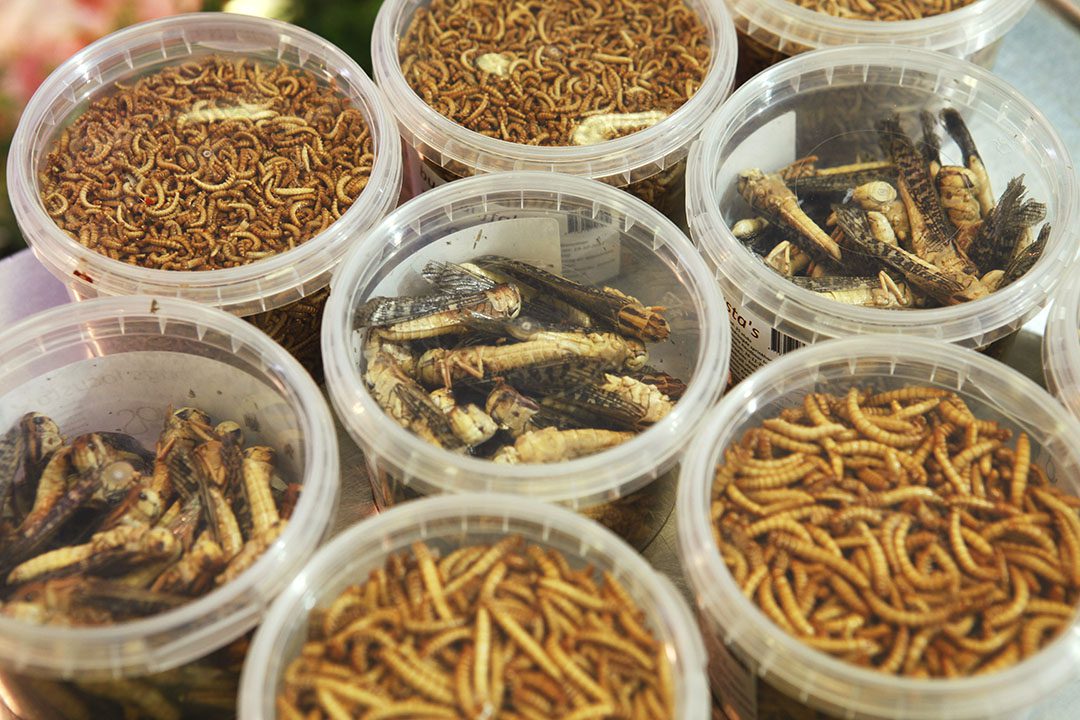
| Feed cost and insect protein | A Murang’a farmer with 500 Kenbro and Kuroiler birds raises black soldier fly larvae. He sells mature larvae at KSh 300 a kg (The Star). | Leave room for a small larvae unit near the manure. Test the savings before you scale. The report gives none. |
Prices and claims are as reported. We did not verify them.
Kenchic’s vet calls poor ventilation a leading cause of respiratory distress. Read his Standard article. It touches every issue above, so design for airflow first.
Start in 8 Steps
- 1Name your buyer. Ask what they want: cage-free, volume or premium eggs.
- 2Pick your system. Cages, deep litter or movable pens.
- 3Choose the site. Isolated, well drained, fenced and east to west.
- 4Size the house. Use 2 sq ft per layer or 1 sq ft per broiler on litter.
- 5Build the shell. Cement floor, 3 ft side walls, mesh and curtains.
- 6Fit the water. Nipples at 1 per 10 to 12 birds on a header tank near 2 m.
- 7Set up the door. Footbath, overalls, fence and a 14-day quarantine rule.
- 8Add green options. Start with solar lights and a gas brooder.
Get a housing and equipment plan for your flock
Send us your flock size, county and buyer. We will price the house, equipment and biosecurity for you.
Ask on WhatsAppQuestions Readers Ask About Modern Chicken Houses
How do I start a modern chicken house in Kenya?
Choose your buyer and system first. Then pick an isolated, well-drained site. Build east to west with a cement floor, 3 ft side walls and mesh above. Fit closed watering and a biosecure entrance.
How much space does each chicken need?
On litter, allow 2 sq ft a layer and 1 sq ft a broiler. Movable pens for improved kienyeji use 0.2 m2 a bird. Cages give a layer 450 cm2.
How much does a layer cage cost in Kenya?
EcoChicks lists a 96-bird A-type set at KSh 39,000. It lists a 128-bird set at KSh 39,000 and an H-type set at KSh 45,000. That is about KSh 305 to 406 a bird.
Are battery cages better than deep litter?
Cages give cleaner eggs, less labour and 1 to 2 per cent lower mortality, says Kenchic’s vet. They cost about KSh 350 more a bird and raise welfare concerns. Litter suits small flocks and cage-free buyers.
Do broilers go in cages?
No. Broilers are raised on dry deep litter at about 1 sq ft a bird. Their weight makes wire floors a risk.
How many nipple drinkers do I need?
Use one nipple per 10 to 12 birds. Space them no more than 35 cm apart. Feed them from a tank about 2 m above the floor.
How many broilers per square metre?
Sources range from about 11 birds a m2 (1 sq ft each) to 25. A Standard guide targets 30 kg a m2. Start near 11 with natural ventilation and go denser only with fans.
What house do improved kienyeji need?
Use 10 birds a m2 to 10 weeks, 8 to 18 weeks and 5 for adults. Add 1 m of perch and 1 nest per 5 birds. Use a raised floor and a run of about 4 m2 a bird.
Which direction should a poultry house face?
Run the long side east to west. That limits direct sun on the walls and keeps the house cooler.
What is a good floor for a poultry house?
Cement. It is easier to clean and helps keep rodents out.
What biosecurity do I need?
Fence the site, put footbaths at the entrance, restrict visitors, and give overalls and boots. Quarantine new birds for at least 14 days.
Is solar worth it for a chicken house?
Solar LED lighting paid back in 1.5 years at one Kenyan broiler farm. Solar heating needs a much larger battery, so many farms use gas for heat.
How big should a solar system be?
Twenty 10 W bulbs for 16 hours use about 3.2 kWh a day. A 1 kWp array with a 5 kWh battery is a reasonable start. Get a supplier to size it for your loads.
What is a movable chicken house?
It is a light shed on skids or wheels that you move across pasture. Birds shelter at night and forage by day. IITA recommends 0.2 m2 a bird.
Can I mix layers and broilers in one house?
No. Keep species and ages apart and run all-in, all-out. Mixed houses spread disease.
How many layers can one worker manage?
Our layers guide assumes one worker per 500 layers on litter. Kenchic’s vet says one person can manage up to 10,000 caged layers.
How much does a poultry house cost in Kenya?
The Standard put a simple open-sided house for 1,000 layers at about KSh 250,000. Costs have since risen, so get local quotes.
Ready to plan your chicken house?
Tell us your county, flock size and buyer. A farm adviser replies within one working day.
Written by Agcenture
We help farmers and agribusinesses across Kenya plan farms, grow profitably and reach markets. Our guides use public sources and field experience.