In this article
Key takeaways
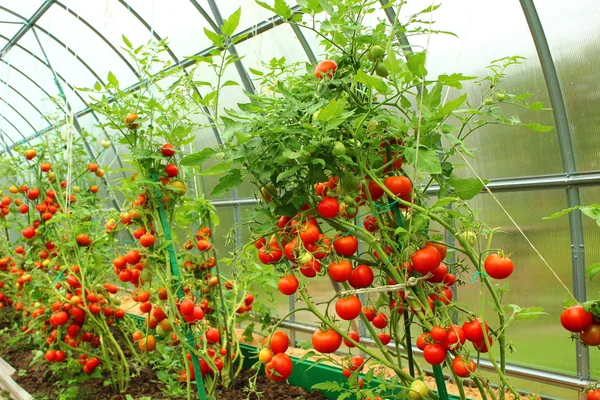
- An 8×30 m house holds about 600 tomato plants, not 1,000.
- Plan on 6 to 8 kg a plant; potentials of 15 kg are rare.
- One six-month crop costs about KSh 151,000 on our model.
- At KSh 50 a kilo, the crop breaks even at 5 kg a plant.
- Single-stem pruning and hygiene lift yield more than any variety.
- Standing weekly buyers matter more than a peak price.
A greenhouse cannot grow more plants next season. The space is fixed the day it is built.
So the business turns on one number: the kilos each vine gives before you pull it out.
This guide covers plant numbers, yield per plant, crop costs and the calendar. It ends with techniques that lift yield.
An 8×30 m greenhouse holds about 600 tomato plants. One six-month crop costs about KSh 151,000. At 8 kg a plant and KSh 50 a kilo it leaves about KSh 89,000. It breaks even at 5 kg a plant.
Who Pays More for Greenhouse Tomatoes?
Hotels, supermarkets and estate buyers who want the same fruit every week. Brokers pay the day’s price, greenhouse or not.
Weekly standing orders
They value uniform size and a steady supply.
Graded, clean fruit
Long shelf life matters more than peak yield.
Direct delivery
Small volumes at close to retail prices.
A greenhouse does not earn a premium by itself. Consistency does.
The other gain is timing. You can pick in months when open fields are empty.
Retail prices peaked at KSh 120.75 a kilo in May 2026 (KNBS). Price history is in tomato farming in Kenya.
How Many Tomato Plants Fit in a Greenhouse?
About 600 in an 8×30 m house and 300 in an 8×15 m house. That is 2.5 plants a square metre.
One 2026 guide uses the same density: 2.5 plants a square metre (a 2026 guide).
Suppliers often quote 1,000 plants for an 8×30 m house (Grekkon).
Crowding looks efficient and is not. Close plants trap humidity, and blight follows.
Space rows about 1.2 metres apart, with 30 to 40 cm between plants.
For what the house itself costs, see greenhouse farming in Kenya.
How Many Kilos Does One Greenhouse Tomato Plant Give?
Plan on 6 to 8 kg a plant in a first crop. Skilled growers reach 12, and seed potentials run to 15.
Greenhouse varieties have a stated potential of 9 to 15 kg a plant (KALRO).
Potential assumes ideal feeding, pruning and pest control for the whole season.
Anna F1, Tylka F1 and Prostar F1 are the usual choices. Compare them in tomato varieties in Kenya.
What One Greenhouse Tomato Crop Costs
About KSh 151,000 for 600 plants over six months, once the house is built. Labour is the largest line.
One greenhouse tomato crop, 600 plants (KSh, our model)
| Line | Amount | Basis |
|---|---|---|
| Labour, half-time for six months | 54,000 | A worker shared with other farm tasks. |
| Fertiliser and crop protection | 35,000 | Our estimate. |
| Wear on the structure and cover | 25,000 | A share of the house’s cost, each crop. |
| Twine, crates and transport | 20,000 | Our estimate. |
| Water and power | 12,000 | About 300 litres a day. |
| Seedlings, 600 | 5,000 | About KSh 8 each, from a propagator. |
| Total for the crop | 151,000 | Our example. Yours will differ. |
Every line is an assumption. The house, tank and drip kit are bought before this and are not in the total.
At 8 kg a plant, each kilo costs about KSh 31.50 to produce.
Older guides put a crop at about KSh 31,000. That left out labour at a living wage and wear on the house.
The wear line matters. A cover lasts a few years, and each crop should repay its share.
How Profitable Is Greenhouse Tomato Farming in Kenya?
At KSh 50 a kilo, 600 plants break even at 5 kg each. At 8 kg they leave about KSh 89,000 a crop.
600 plants at three yields (KSh a crop, our model)
| Kilos a plant | Harvest | Gross sales at KSh 50 | Left from the crop |
|---|---|---|---|
| 6 | 3,600 kg | 180,000 | 29,000 |
| 8 | 4,800 kg | 240,000 | 89,000 |
| 12 | 7,200 kg | 360,000 | 209,000 |
Left from the crop is before your own pay, tax and loan repayments.
Price moves the result as much as yield. At KSh 20 a kilo, the 8 kg crop loses KSh 55,000.
Older guides promised KSh 278,000 from one house. That assumed 800 plants and almost no costs.
Gross sales are not profit. One house is a side income, not a salary.
Price scenarios and the cost of the house are in greenhouse farming in Kenya.
Inside a greenhouse the plant count is fixed. Kilos per plant decide the season.
A Six-Month Greenhouse Tomato Calendar
Transplant, train and prune for ten weeks, then harvest weekly for four to six months.
- Wk 0Transplant.Four-week seedlings into moist, treated beds.
- Wk 3Train.Twine each plant to the overhead wire.
- Wk 5Prune and scout.Remove suckers and check for pests twice a week.
- Wk 10First harvest.About 75 days after transplanting.
- Wk 10-30Harvest weekly.Grade, crate and deliver the same day.
- Wk 31Clear and rest.Remove plants, solarise the soil and rotate.
Count back ten weeks from the shortage you expect. That is your transplanting date.
Modern Tomato Farming Techniques That Lift Kilos per Plant
Single-stem pruning, string training, drip fertigation, grafted seedlings and weekly leaf removal.
- 1Prune to one stem.Remove side shoots when they are a few centimetres long.
- 2Train up a string.Wind the vine weekly. Lower it when it reaches the wire.
- 3Feed through the drip line.Small, frequent doses, guided by a soil test.
- 4Use grafted seedlings.Rootstocks resist bacterial wilt in infected soil.
- 5Strip lower leaves.Air moves, humidity falls and fruit colours evenly.
- 6Grow in bags if soil is sick.Clean media restarts a house that wilt has ruined.
Start with a soil test. See soil testing in Kenya.
The Four Problems That End Greenhouse Tomato Crops
Bacterial wilt, the tomato leafminer, whitefly and blight. Three of the four arrive on seedlings, soil or shoes.
Prevent
- 1Footbath and double door
- 2Intact insect net on every vent
- 3Certified or grafted seedlings
- 4Rotation after every tomato crop
Act early
- 1Remove wilted plants the same day
- 2Hang pheromone and sticky traps
- 3Vent early on humid mornings
- 4Rotate chemical groups
Anna F1 is not tolerant to bacterial wilt or the leafminer. Hygiene has to do that work.
Grades, Punnets and Dried Tomatoes: Earning More per Kilo
Grade into two classes, pack the top grade in labelled trays, and dry or process the rest.
- 1Top grade to hotels and shops.Uniform size, packed in clean trays.
- 2Second grade to traders.Sold the same day at the market price.
- 3Soft fruit to drying or paste.Nothing leaves as waste.
Processing options are in value addition business ideas.
How to Sell 200 Kilos a Week Without a Broker
Three or four standing buyers taking 50 kg each, delivered on fixed days.
- 1Visit buyers before planting.Ask for variety, size and weekly volume.
- 2Agree a price band.A floor and a ceiling protect both sides.
- 3Deliver on the same days.Reliability earns the next order.
- 4Invoice weekly.Small buyers pay faster on short cycles.
- 5Keep one trader on call.For the weeks your buyers take less.
A 600-plant house at 8 kg yields about 240 kg a week across 20 weeks.
What Goes Wrong With Greenhouse Tomatoes
Soil wilt in the second crop and a harvest that lands in a glut. Then a worker misses a week of pruning.
Do this
- 1Budget on 6 kg a plant
- 2Rotate with capsicum or cucumber
- 3Keep a week of water stored
- 4Record every spray and harvest
Avoid this
- 1Planting 1,000 vines in 240 m²
- 2Tomato after tomato
- 3Buying seedlings from an unknown nursery
- 4Counting the house as free
Inside a greenhouse the plant count is fixed. Kilos per plant decide the season.
How to Start Greenhouse Tomato Farming
Find the buyers, test the soil and secure water. Then build, and order seedlings four weeks ahead.
Put three yield cases into a plan. Our farm business plan guide gives the layout.
No greenhouse yet? Compare open-field tomato farming on the same numbers.
Planning a greenhouse tomato project?
Agcenture prepares crop budgets, market checks and financing plans for horticulture. Tell us your site and house size.
Written by Agcenture
Agcenture helps Kenyan farmers and food businesses plan, finance and grow. Our guides use public sources and clearly labelled assumptions.
Questions readers ask
How profitable is greenhouse tomato farming in Kenya?
A 600-plant crop costs about KSh 151,000 on our model. At 8 kg a plant and KSh 50 a kilo it leaves KSh 89,000.
How many tomato plants fit in an 8×30 m greenhouse?
About 600, at 2.5 plants a square metre.
How many kilos does one tomato plant produce in a greenhouse?
Plan on 6 to 8 kg. Stated potentials run from 9 to 15 kg.
How long do greenhouse tomatoes take to mature?
About 75 days to first harvest, then four to six months of picking.
Which tomato variety is best for a greenhouse?
Anna F1, Tylka F1 and Prostar F1 are the common choices.
Why do greenhouse tomatoes wilt?
Usually bacterial wilt in the soil. Rotate crops, use grafted seedlings or grow in bags.



Am happy to get this information, I need a company that can hold my hand so that we walk together for me to succeed, am at Kakamega I need annah f1 seedlings where can I get them?