Kenya doesn’t have an access to agricultural finance problem. It has a market access problem
Kenya has hundreds of banks, SACCOs and digital lenders. Mobile money sits on almost every phone. Decades of NGO and donor projects have pushed financial inclusion deep into rural areas.
Yet farming, one of the country’s largest sectors, receives only a small share of formal lending. Farming employs about four in ten Kenyans. It produces over a fifth (20%) of GDP. It gets less than four per cent of bank credit. Most smallholder farmers have never taken a formal loan. Many who qualify never apply.
Why farmers in Kenya fail to take agricultural loans
Here is the hard question. If finance is more available than ever, why do so many farmers stay away from taking it?
The usual answers blame the farmer. Lack of collateral. Inadequate information and training. Too much fear of debt, CRB listing or auctioning. So the sector responds with more branches, more agents, more training sessions and more loan products. The gap has barely moved over decades.
The answer is simpler and more uncomfortable. Farmers do not misunderstand finance. Finance has been designed for a market system that does not exist. The loan assumes a steady income the farm does not produce. It assumes a buyer who has not been found. It assumes records nobody kept. It assumes a value chain that loses a third of the crop before sale.
Farmers see all this clearly. Then they decline. The most financially sensible farmer in the room is often the one who refuses a loan. That decision is not driven by fear. It is driven by business judgement and experience.
This is why the debate at platforms like the FINAS Summit in Nairobi matters. The question should not be how to lend more to farmers. It should be how to build markets where lending makes sense.
This article makes that case in two parts. First, the five failures that explain why agricultural finance keeps missing. Then, the five fixes that can move agriculture lending from as low as 3% to 6%.
Loan Product Design
Farm loans in kenya are designed for salaries, not farms
A loan built for payslips
Look at a typical farm loan in Kenya. Monthly repayments start almost at once. Interest is charged from day one. The design is copied, almost line for line, from salary loans.
Now look at farm income. A maize farmer earns once or twice a year. A mango farmer earns in a short harvest window. A coffee farmer waits months for the cooperative payout. Only defined sectors like dairy or tea comes close to monthly income, and even that swings with the seasons.
Put the two side by side. The farmer earns twice a year. The loan wants cash every month. To keep paying, she must sell a goat, borrow elsewhere or divert school fees. The loan that was meant to reduce her risk has increased it.
Digital lenders repeat the mistake at speed. Their loans run for thirty days. No crop on earth matures in thirty days. The farmer who taps the app is borrowing against luck, not against a harvest.
How farmers actually manage cash flow
Contrast this with how the same farmer manages her own money. She joins a chama that pays out at planting time. She keeps a cow so milk covers the small weekly costs. She stores maize and sells when prices rise. Her own informal system matches cash to the crop calendar. The formal loan is the only financial tool in her life that refuses to.
So she declines. Or she takes the loan once, suffers, and warns her group. Farmers are not rejecting finance. They are rejecting products that raise risk instead of lowering it. Any customer would do the same.
The problem is not the farmer. It is a loan designed for the wrong business model.
Even if lenders redesigned every agricultural loan tomorrow, one obstacle would remain. Farmers cannot repay debt from income that may never arrive.
Market uncertainties
Farmers cannot borrow against uncertainty.
Every farm loan is a bet on a future sale
A loan is repaid from income. Farm income comes from selling the harvest. Every farm loan is really a bet on a future sale.
Now ask what most smallholders actually face at planting time. No confirmed buyer. No agreed price. No sale contract. Just hope that a broker will show up at harvest and pay something fair.
The numbers make the point. A mango farmer can get thirty shillings a piece in a scarce season. In a glut, the same mango fetches three shillings, if it sells at all. Which price should she borrow against? Nobody knows, including her. Her future income is a guess. No lender can price a guess. No sensible farmer borrows against one.
Readiness is not bankability
This explains a pattern that frustrates many development and business development services projects. Farmers get trained in record keeping, savings and money skills. The training works. The farmers improve. The loans still do not come.
Why? Because readiness is not bankability.
Readiness describes the farmer. Bankability determines the deal.
A trained farmer with no buyer is a better farmer and the same credit risk. A farmer group can pass every readiness check and still fail the only test that matters. Can this loan be repaid from a sale we can count on?
The need for checkoff credit
The missing bridge is the market. Watch what happens when a real buyer enters the picture.
In a three-way agreement, the farmer, the lender and a committed buyer sign together. The buyer confirms the volume and the price. The lender finances inputs, labor and other investments against that confirmed sale. At delivery, the loan is deducted at source and the farmer is paid the balance. Kenyans know this as a checkoff. KTDA and Dairy has run on it for years, quietly and at scale. The cooperative deducts the loan from the milk cheque, and lending flows.
Contract farming is the wider version of the same idea. A firm buying deal turns a guess into a cash flow. It cuts loan risk better than any guarantee fund. The contract fixes the income. The guarantee only insures it.
Markets create bankable cash flows. Banks do not create markets.
But even when markets improve, another barrier remains. Many good farmers are still invisible to the financial system.
Record Keeping and Farm Accounting
Invisible farmers are expensive farmers
Walk into any credit department and ask what they know about a given smallholder farmer. Usually, nothing. No record of what she grows. No history of what she sells. No proof of income. She may have farmed profitably for twenty years. To the lender, she does not exist.
Banks lend to what they can see. A salaried worker has payslips. A shopkeeper has till records and M-Pesa statements. A farmer has no farm records, just memory and a notebook, if that. Invisible businesses look risky, whatever their real performance.
Invisibility also makes farmers expensive. Because nothing is on file, every loan needs a field visit, paperwork, checks and follow-up. That effort costs roughly the same for thirty thousand shillings as for three million. On a small rural loan, the cost eats the entire margin. Banks are not being cruel when they avoid smallholders. The arithmetic simply fails at the level of one farmer.
These look like two problems. They are really one. The lender cannot see performance, so every farmer must be assessed from scratch. That pushes up the cost of every small loan. Solve the visibility problem and the economics improve with it.
Data and aggregation change the economics
That is exactly what is starting to happen. Digital farmer profiles, delivery records and mobile money histories change this. They do for a farmer what payslips do for an employee. Traceability systems built for export markets also produce the exact records lenders need. Cooperatives multiply the gain. A cooperative with clean member records can be appraised once and unlock loans for hundreds. Its master record become a credit file. Its milk or produce cheque becomes the checkoff channel.
The cost problem shrinks at the same time. Lend to a cooperative or a bulking point, and one appraisal reaches hundreds of farmers. One agreement. One repayment channel. The numbers flip from hopeless to attractive. The group also adds the peer pressure that keeps loans paid.
For farmer groups and agro-SMEs, the message is clear. Your records are now a financial asset. Guard them like one.
Still, better products, reliable buyers and stronger data all assume one thing: that farmers have a compelling business reason to borrow in the first place. That brings us to the failure the development sector is least comfortable discussing.
Unsustainable BDS
The limits of business development services
Across Africa, donor projects have invested heavily in business development services (BDS). Farmers attend money skills classes. They write business plans. They learn bookkeeping. They receive entrepreneurship training.
This work has value. Capable farmers manage money better and negotiate better. Nobody should dismiss it.
But notice what it quietly assumes. That the barrier to finance is farmer skill. That once farmers are ready, borrowing will follow.
It rarely does.
Skill was never the binding constraint. Money skills are not the root cause when there is no profitable market to finance. A business plan does not create a buyer. Loan readiness does not create cash flow.
Finance is derived demand
Here is the principle the sector keeps relearning. Finance must follow market.
Nobody wants a loan for its own sake. A business seeks capital because a real opportunity exists and growing into it costs money. That opportunity comes from the market, not from the training room.
Marketing has an old line for this. People do not buy drills. They buy holes. Likewise, farmers do not want loans. They want profitable businesses. A loan is simply one tool for getting there.
Watch how demand appears when the sequence runs the right way. A processor signs supply contracts for sorghum with farmer groups in a county. Suddenly those farmers need certified seed, fertiliser, labour and transport, all before the harvest pays. Demand for finance has just been created, naturally and at commercial scale. No training session did that. A buyer did.
Kenya has seen this before. When breweries contracted sorghum farmers, input credit followed the contracts. When exporters organised French bean growers, banks that had ignored those farmers suddenly found them attractive. The finance did not lead. It followed the market, as it almost always does.
The wrong sequence versus the right sequence
Too many projects still run the sequence backwards.
The wrong sequence
Training → Business plans → Financial literacy → Loan → Hope
The right sequence
Market opportunity → Buyer → Income → Need for finance → Loan → Growth
The difference matters because finance is not the objective. Growth is.
Outcomes Vs. outputs
This also changes how success should be measured. Development projects often celebrate the number of farmers trained, business plans completed or bank accounts opened. These are useful outputs, but they are not outcomes. The better questions are different. Did farmers sell more? Did their incomes increase? Did businesses invest and expand? Did commercial finance begin flowing without subsidies? If profitable transactions do not increase, the market has not changed, no matter how many certificates were handed out.
This is not an argument against training. It is an argument about sequence.
Train a farmer who has a contract, and the training compounds.
Train a farmer who has no market, and the training struggles to create value.
The same training produces different results because the surrounding market system is different.
The goal should never be to create borrowers. It should be to create profitable businesses that choose to borrow because growth requires capital.
Even then, one challenge remains. Finance cannot succeed if the value chain destroys the income that should repay the loan.
Struggling value chains
Post-harvest losses destroy loan money
Suppose a farmer gets everything above. A well-designed loan. A signed buyer. A digital record. A real business case.
She can still lose everything between the farm and the market.
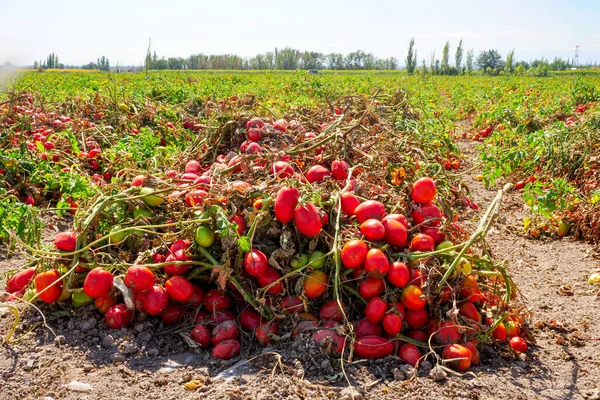
In Kenyan horticulture, a third or more of the crop is often lost after harvest. Mangoes rot at collection points. Vegetables wilt waiting for transport. Milk spoils before it reaches the cooler.
Every kilo lost is loan money destroyed.
No repayment schedule survives a rotten harvest.
Access beats ownership
The standard answer has often been to help farmers buy assets. Give the group a cold room. Fund a warehouse. Buy a tractor.
It usually disappoints.
The assets are expensive. They sit idle for much of the year. Maintenance suffers. Management becomes another burden. A cold room serving one small farmer group rarely operates at the scale needed to remain financially sustainable.
The real need is access, not ownership.
A farmer does not need to own a cold room. She needs her mangoes kept cool for three days at a fair price. In cooling-as-a-service models, a specialised operator owns and manages the facility. Farmers pay only for the service they use. Quality improves. Losses fall. The income that repays the loan survives the journey to market.
The same logic applies to tractors, storage, irrigation, transport and processing. Shared services turn large capital costs into affordable pay-per-use services. They also create new rural businesses and jobs, especially for young people, without requiring them to own expensive equipment.
This is the wider lesson. Finance is only one service within a value chain. If transport fails, finance fails with it. If storage is missing, finance absorbs the loss. If buyers cannot collect produce, the loan becomes another cost instead of a growth tool.
Trust: the slowest asset to rebuild
Trust belongs in this system too, and it may be the hardest asset to rebuild.
Communities remember neighbours who lost land to auctioneers. They remember fees that were never explained. They remember field officers who disappeared once the loan was approved. One bad experience spreads quickly through a farming community.
Many also remember projects that gave money away. Free money teaches people to wait for the grant version of every offer. Each poorly targeted subsidy makes the next honest loan harder to introduce. Grants still have an important role in financing public goods, first-loss facilities and market development. They become harmful when they replace finance that could already work commercially.
Finance succeeds only when the wider market system works. Money cannot repair weak logistics, poor governance or broken trust on its own. It can only flow through those systems.
That is why fixing agricultural finance starts well before a loan application reaches a bank.
The Way Forward
The encouraging news is that none of these failures requires a new invention. Every solution below is already working somewhere in Kenya, whether in dairy, sorghum, horticulture or export value chains. The challenge is not finding new ideas. It is applying proven ones together instead of in isolation.
Each failure points to a practical fix.
1. Design finance around the crop calendars
Agricultural finance should begin with how farmers earn, not how banks prefer convenience in collecting repayments.
Match repayment schedules to harvests. Build grace periods that cover the production cycle. Price loans according to the risks of individual value chains rather than applying one blanket agricultural risk premium. Introduce crop and livestock insurance. Dairy in Meru does not carry the same risk as rain-fed maize in an arid county, and loan products should reflect that difference.
The principle is simple. Design finance around the customer’s cash flow, just as every other successful financial product already does.
2. Finance markets, not just farmers
The strongest risk management tool in agricultural finance is often not a guarantee fund. It is a committed buyer.
Expand the use of checkoff systems, three-way agreements and fair contract farming. Finance production against confirmed sales rather than hoped-for markets. When repayment is deducted at the point of sale, risk falls for both farmers and lenders.
Banks do not create markets.
Markets create bankable cash flows.
3. Make farmers visible through data and aggregation
Invisible businesses struggle to access finance.
Digital production records, delivery histories and mobile money data can transform years of farming experience into evidence that lenders understand. Cooperatives and producer organisations can go further by aggregating both production and information.
The same data that improves traceability can also improve lending.
Aggregation changes the economics as well. Instead of financing hundreds of scattered individuals, lenders can work through trusted cooperatives, producer organisations and bulking centres where one appraisal reaches many farmers.
Visibility reduces both risk and cost.
4. Shift BDS from preparing farmers for finance to building markets
Training still matters.Financial literacy still matters. Business planning still matters.
But they should support functioning markets, not substitute for them.
BDS and Agriculture NGO programmes in Kenya should spend as much energy connecting farmers to reliable buyers, processors and exporters as they spend teaching bookkeeping. Market linkages, stronger producer organisations, quality standards and commercial partnerships create the profitable opportunities that generate demand for finance.
Success should also be measured differently.
Count profitable transactions, repeat sales, commercial investment and lasting business relationships, not simply the number of farmers trained or accounts opened.
Finance should be treated as the result of successful market development, not its starting point.
5. Build finance into the whole value chain
Finance works best when the rest of the market system works with it.
Invest in shared service models that give farmers affordable access to cooling, storage, transport, mechanisation and processing instead of expecting every farmer group to own expensive assets.
Strengthen extension, logistics, governance and aftercare alongside finance.
Rebuild trust through clear pricing, simple products, transparent communication and continued support after disbursement.
Use grants carefully, reserving them for public goods and genuine market failures rather than replacing commercial finance where it can already succeed.
Finance should strengthen a functioning value chain, not carry the weight of a broken one.
In conclusion
For years, the conversation has centred on how to persuade more farmers to borrow. That is the wrong question. Smallholder farmers are not avoiding credit because they fear banks or misunderstand finance. They are responding rationally to loans that fit a salary they do not earn, markets that do not yet exist, lenders who cannot see their business and value chains that lose the harvest before it pays. Most business owners would make the same decision.
Kenya does not need to persuade farmers to borrow. It needs to build market systems where borrowing becomes the obvious business decision. That means finance designed around breeding and crop calendars, markets built before loans are promoted, farmers made visible through data and success measured in profitable transactions. None of this requires reinventing agricultural finance. The solutions exist. What is missing is the discipline to connect them. Because finance is not the starting point of agricultural transformation. It is the consequence of markets that work.