In this article
Key takeaways
- A 70 kg bag of dairy or layers feed averages KSh 3,500 in 2026. Kenya needs about 55 million tonnes of feed a year. It grows about 40% of that.
- KEBS tested 17 poultry and dairy feed brands. Only one met the standard. Mixing your own gives you control of what goes in the bag.
- Homemade feed wins when the recipe leans on bran, pollard, maize germ and cakes. It loses when it leans on fishmeal and soya.
- At our planning prices, a 50 kg dairy ration costs KSh 2,000. The same weight in dairy meal costs about KSh 2,400.
- A cooperative of 30 dairy farmers can mix for about KSh 43,100 a tonne. That beats a bag price of KSh 48,600.
- A 2,000 tonne mill earns about KSh 3.9 million a year in our base case. Raw materials take about 87% of the ex-factory price.
Yes, if you mix recipes built on cheap by-products and buy in bulk. A farmer can cut feed cost where the formula leans on bran, pollard, maize germ and cakes. A cooperative can do it with one shared mixer. Selling feed is a thin-margin business of about 4% net. Cost every recipe against your local bag price before you mix a tonne.
Is Homemade Animal Feed Worth It in Kenya? Check the Bag Price and the Bag Contents
You stand at the agrovet counter. A 70 kg bag of dairy or layers feed costs about KSh 3,500 (The Star). You pay, because it is the only bag on the shelf.
Then you remember a test. KEBS checked 17 poultry and dairy feed brands. Only one met the standard (Food Business Africa). That counter is the problem, not you.
Homemade feed wins when your recipe leans on bran, pollard and cakes. It loses when it leans on fishmeal and soya.
This guide is for individual farmers and cooperatives. It shows how to formulate feed, how to cost it, and which recipes pay. It carries every chicken, pig and dairy formula, costed at 2026 prices. It also covers the licences and margins if you want to sell feed.
What is feed formulation?
Feed formulation is mixing ingredients to hit a nutrient target at the lowest cost. You set the protein and energy an animal needs. You then pick local ingredients that supply them. A homemade ration is the result, mixed on your farm or in a cooperative store.
Home mixing is already big. Home mixers and cottage industries make about 500,000 tonnes. Compounded feed totals 2.5 million tonnes (The Star).
Three ways to make feed
Three ways to make feed in Kenya
| Route | Who it suits | Volume | Capital | Licence |
|---|---|---|---|---|
| Home mix | One farmer feeding a flock or herd | Under 1 tonne a month | KSh 80,000 to KSh 200,000 | None for your own animals |
| Cooperative unit | 20 to 50 members buying together | 100 to 300 tonnes a year | KSh 750,000 plus stock | Ask the Board before selling to non-members |
| Feed mill | An investor selling to agrovets | 1,000 tonnes a year and up | KSh 3,000,000 plus KSh 10.0 million stock | Business permit, KEBS and the Board |
Capital figures are our estimates. Mixers list from KSh 79,500 to KSh 350,000 (Ecochicks).
Should you do this? A quick test
Five questions before you mix
| Question | Go ahead if | Wait if |
|---|---|---|
| Volume | You feed at least 50 birds, 5 pigs or 2 cows, or you join a group | You feed a handful of animals |
| Ingredients | You can buy maize, bran and cakes in bulk from one or two suppliers | You buy single bags at retail prices |
| Storage | You have a dry, ventilated store off the floor | Your store leaks or floods |
| Knowledge | You can follow a recipe and keep a batch log | You plan to guess the mix |
| Cash | You can pre-pay a month of ingredients | You rely on weekly credit |

Why Farmers Mix Their Own Feed: A 33 Million Tonne Gap and Bags That Fail
Kenya needs about 55 million tonnes of feed (dry matter) a year. It grows about 40% of that. The gap is about 33 million tonnes (The Star, July 2026).
Feed takes 70 to 80% of production cost for many farmers. When feed moves, farm profit moves with it.
Supply: imports and a handful of inputs
About 80% of feed raw materials are imported. Over 90% of soybeans are imported. Sunflower and cottonseed meal are 80 to 90% imported (Kilimo News).
Maize is about 40% of a standard feed mix (Seed Farm). Maize rose 45% from early 2025. By June 2026 a 90 kg bag fell to KSh 4,000 from KSh 4,600 (Milling Mea).
The feed market in numbers
| Measure | Figure | Source |
|---|---|---|
| Annual feed need | About 55 million tonnes dry matter | The Star, July 2026 |
| Local production | About 40% of need | The Star, July 2026 |
| Feed share of farm cost | 70 to 80% | The Star, July 2026 |
| Feed millers | About 400, mostly small | The Star, July 2026 |
| Compounded feed | About 2.5 million tonnes a year | The Star, July 2026 |
| Made by home mixers | About 500,000 tonnes | The Star, July 2026 |
| Imported raw materials | About 80%; soybeans over 90% | Kilimo News |
| 70 kg dairy or layers bag | About KSh 3,500 | The Star, Feb 2026 |
| Poultry feed, by weight | About 60% energy, 24% protein, 16% minerals and additives | The Star, July 2026 |
Demand: who buys the feed
Poultry takes about 60% of commercial feed and dairy about 29% (Kilimo News). Four forces keep demand rising.
- 1A growing livestock sector. More farmers keep animals for sale, so more buy feed.
- 2Population and cities. Kenya may pass 60 million people by 2030. They want milk, eggs and meat.
- 3Government support. Subsidy and support programmes push farmers toward formulated feed.
- 4Quality awareness. Farmers now ask what is in the bag, not only what it costs.
Quality: the reason cooperatives are forming
Of the 17 brands KEBS tested, only one met the standard. Over half lacked proper formulation, and protein and minerals fell short (Food Business Africa).
Officials now plan a national feed quality index and tougher enforcement against diluted feed (Science Africa). A KSh 465 billion, 10 year National Feed Strategy was announced in July 2026 (The Star).
Supply is also growing. De Heus is building a KSh 3 billion, 240,000 tonne plant at Athi River (The Star). Large plants bring scale. They do not remove the price and quality risk at the counter.
How to Formulate Animal Feed: Six Steps From Nutrient Target to Costed Bag
You do not need software to start. You need a target, a list of ingredients and a calculator.
- 1Set the target. Pick the animal and stage. A layer chick needs 18 to 20% protein. A layer needs 16 to 18%.
- 2List your ingredients. Note the protein and the price per kilo of each.
- 3Balance energy and protein. Use the Pearson square below for two ingredients.
- 4Add minerals, vitamins and additives. Premixes go in small amounts.
- 5Cost the bag. Divide the batch cost by its weight and compare with the bag price.
- 6Test small. Feed one pen for two weeks and record growth, eggs or milk.
A worked example: the Pearson square
Say you want 100 kg of 18% protein feed. Your inputs are maize (9% protein) and soya (46%).
Pearson square for 18% protein
| Step | Working | Result |
|---|---|---|
| Soya parts | 18 minus 9 (maize protein) | 9 parts |
| Maize parts | 46 (soya protein) minus 18 | 28 parts |
| Total parts | 9 plus 28 | 37 parts |
| Soya in 100 kg | 9 divided by 37 times 100 | 24.3 kg |
| Maize in 100 kg | 28 divided by 37 times 100 | 75.7 kg |
Add minerals and premix after this step. The square balances protein only, not minerals or amino acids.
Key ingredients for formulation
Every feed has four groups of ingredients. The table shows the role of each, typical protein and the price we use in this guide.
Ingredient groups and planning prices
| Group | Ingredient | Protein, typical | Planning price a kilo |
|---|---|---|---|
| Energy | |||
| Energy | Maize grain | 9% | KSh 44 |
| Energy | Wheat bran | 15% | KSh 25 |
| Energy | Wheat pollard | 15% | KSh 30 |
| Energy | Maize germ | 12% | KSh 30 |
| Protein | |||
| Protein | Soya meal | 46% | KSh 95 |
| Protein | Fishmeal | 60% | KSh 120 |
| Protein | Sunflower cake | 30% | KSh 42 |
| Protein | Cottonseed cake | 38% | KSh 42 |
| Minerals and additives | |||
| Minerals | Lime or shell grit | 0% | KSh 15 |
| Minerals | Bone meal | 0% | KSh 45 |
| Additives | Premix, amino acids, enzymes, binders | Varies | Priced per gram |
Maize is the wholesale price from Milling Mea (KSh 4,000 a 90 kg bag, June 2026). Other prices are our planning figures. Replace them with your supplier’s quote.
- 1Energy sources such as maize, sorghum and wheat bran fuel growth and work.
- 2Protein sources such as soybean meal, fishmeal and sunflower cake build muscle, milk and eggs.
- 3Vitamins and minerals come from premixes with calcium and phosphorus.
- 4Additives such as probiotics, enzymes and acidifiers improve digestion and feed use.
Blend the micro-ingredients first. Mix premixes and amino acids into a small portion of the maize. Then add the rest. This spreads the nutrients evenly through the bag.
AKEFEMA describes a typical poultry bag. It is 60% energy, 24% protein and 16% minerals and additives (The Star). Use that as a sense check on any recipe.
Homemade Chicken Feed Formulas for Chicks, Growers, Layers and Broilers (70 kg Batches)
Feed can take up to 70% of the cost of poultry. Homemade formulas let you control the nutrition and trim that bill. Use the five formulas below for layers and broilers. Each makes a 70 kg bag.
Why consider homemade chicken feed?
- 1Save money. Local ingredients can cost less than a bagged mash.
- 2Customise nutrition. Tailor the formula to the dietary needs of your birds.
- 3Avoid unwanted additives. You control what goes into the diet.
Layer chicken feed formulas
A layer chick mash needs 18 to 20% digestible crude protein for fast early growth.
Layers chick mash, 1 to 4 weeks (70 kg bag)
| Ingredient | Amount |
|---|---|
| Whole maize | 31.5 kg |
| Wheat bran | 9.1 kg |
| Wheat pollard | 7.0 kg |
| Sunflower or linseed | 16.8 kg |
| Fishmeal | 1.5 kg |
| Lime | 1.75 kg |
| Salt | 0.03 kg |
| Additives | |
| Tryptophan | 70 g |
| Premix amino acids | 20 g |
| Lysine | 3.0 g |
| Methionine | 10 g |
| Threonine | 70 g |
| Enzymes | 50 g |
| Coccidiostat | 60 g |
| Toxin binder | 50 g |
The listed ingredients weigh 67.7 kg. Top up with about 2 kg of maize to fill a 70 kg bag.
Practical tip. Combine the small micro-ingredients first, then add the larger ones. The nutrients then spread evenly.
As chicks become pullets, protein drops to about 16 to 18%. This feed builds strong frames before laying starts.
Growers mash, 4 to 8 weeks (70 kg bag)
| Ingredient | Amount |
|---|---|
| Whole maize | 10 kg |
| Maize germ | 17 kg |
| Wheat pollard | 13 kg |
| Wheat bran | 10 kg |
| Cottonseed cake | 6 kg |
| Sunflower cake | 5 kg |
| Soya meal | 3.4 kg |
| Lime | 2.07 kg |
| Bone meal | 0.7 kg |
| Fishmeal | 3 kg |
| Salt | 0.014 kg |
| Additives | |
| Coccidiostat | 1 g |
| Premix | 18 g |
| Zinc bacitracin | 1 g |
| Mycotoxin binder | 7 g |
I raised pullets on our family farm in Meru. Homemade growers mash saved us up to 25% on feeding costs. The birds stayed healthier than on commercial feed.
At 18 weeks pullets become laying hens. Protein eases to about 16 to 18%, but calcium matters more for shell strength.
Layers mash, 18 weeks and older (70 kg bag)
| Ingredient | Amount |
|---|---|
| Whole maize | 34 kg |
| Soya | 12 kg |
| Fishmeal | 8 kg |
| Maize, rice or wheat bran | 10 kg |
| Lime | 6 kg |
| Additives | |
| Premix | 175 g |
| Lysine | 70 g |
| Methionine | 35 g |
| Threonine | 70 g |
| Tryptophan | 35 g |
| Toxin binder | 50 g |
Practical tip. Layers need calcium from lime or shell grit for strong shells. If you see soft shells or fewer eggs, raise the lime a little or add calcium.
Broiler chicken feed formulas
Broilers are bred for meat. They need high protein early for muscle. Later the diet shifts to energy.
In the first four weeks broilers need 22 to 24% digestible crude protein for muscle and feathers.
Broiler starter, 0 to 4 weeks (70 kg bag)
| Ingredient | Amount |
|---|---|
| Whole maize | 40 kg |
| Fishmeal | 12 kg |
| Soya bean meal | 14 kg |
| Lime | 4 kg |
| Additives | |
| Premix | 70 g |
| Lysine | 35 g |
| Threonine | 35 g |
Practical tip. Store feed in a cool, dry place. Damp feed grows mould, which harms broilers. A drum mixer blends evenly, but thorough hand mixing also works.
From week five, protein drops to 18 to 20% and energy rises for fat deposition.
Broiler finisher, 5 weeks and older (70 kg bag)
| Ingredient | Amount |
|---|---|
| Whole maize | 10 kg |
| Maize germ | 16.7 kg |
| Wheat pollard | 13.3 kg |
| Wheat bran | 10 kg |
| Cottonseed cake | 6 kg |
| Sunflower cake | 4.7 kg |
| Fishmeal | 3 kg |
| Soya meal | 3.4 kg |
| Lime | 2 kg |
| Bone meal | 0.04 kg |
| Additives | |
| Grower premix | 10 g |
| Salt | 5 g |
| Coccidiostat | 5 g |
| Zinc bacitracin | 5 g |
I ran a small broiler operation in Eldoret on homemade feed for the whole flock. Feed costs fell 15%. The broilers reached market weight faster than the previous batch on store-bought feed. A farmer in Eldoret
Top benefits of making your own chicken feed
- 1Cost savings. For many farmers this is the difference between profit and loss.
- 2Control over ingredients. You decide what goes in. No fillers or low-quality inputs.
- 3Flexibility. Tweak formulas for your breed, climate or ingredient supply.
- 4Improved nutrition. Fresher, higher-quality ingredients support healthier birds.
Challenges of mixing chicken feed, and the fix
Challenges of homemade chicken feed
| Downside | What goes wrong | Solution |
|---|---|---|
| Nutritional imbalance | Feed lacks nutrients or carries too much, so growth or health suffers | Check poultry nutrition guides or ask an expert. Match the nutrient need of the birds |
| Inconsistent quality | Ingredient quality varies, so feed spoils or is contaminated | Buy good ingredients. Store them properly |
| Time and effort | You must gather, measure and mix | Use a drum mixer. Mix larger batches and store them well |
| Missing additives | Homemade feed may lack vitamins or coccidiostats | Buy premixes, vitamins and supplements. Dose them correctly |
| Ingredient availability | Some inputs run short or change price | Swap in similar ingredients. Plan ahead for shortages |
| Disease spread | Badly processed or stored inputs carry pathogens or toxins | Check quality, store well and add a mycotoxin binder |
Chick losses can start with feed. Read our guide on why chicks die if you see weak or dying birds. For the bird side of the numbers see our layers guide and broiler guide.
Homemade Pig Feed: Starter, Grower and Breeding Rations With Daily Amounts

Feed can take up to 70% of pig production cost. Mixing your own feed lets you control what the pigs eat and trim that bill.
Why make your own pig feed?
- 1Cost savings. Farmers report savings of 30 to 50%. They use local grain and food waste.
- 2Nutritional control. You can balance the diet for age, health and growth stage.
- 3Waste reduction. Vegetable and fruit leftovers add vitamins and fibre.
- 4Customisation. Piglets, porkers and baconers have different needs. You can feed each group on its own mix.
- 5Know what is in the bag. You choose the additives. Ask your supplier for the label on any bought feed.
What pigs need
Pig nutritional requirements
| Nutrient | Main source | Why it matters |
|---|---|---|
| Energy | Maize, wheat, barley | Fuels daily activity and growth |
| Protein | Soybean meal, fishmeal | Builds muscle. Growing pigs need about 15 to 18% protein |
| Fibre | Wheat bran, rice bran | Aids digestion and keeps pigs fuller longer |
| Minerals and vitamins | Limestone, calcium carbonate, bone meal, salt | Calcium builds bone. Salt balances electrolytes |
| Fats | Sunflower seeds, vegetable oil | Improve feed efficiency and meat quality |
Essential ingredients for homemade pig feed
Pig feed ingredients
| Ingredient | What it gives |
|---|---|
| Corn (maize) | High energy and easy digestion. A staple in pig diets |
| Soybean meal | Top protein source for muscle and faster growth |
| Wheat bran | Low-cost bulk and fibre |
| Sunflower meal | Protein and healthy fats for better meat quality |
| Skimmed milk or whey | Protein and calcium, mostly for weaners |
| Salt | Sodium for healthy electrolyte levels |
| Limestone or calcium carbonate | Calcium for bone development |
| Optional add-ins | |
| Vegetable scraps | Carrots, potato skins and leafy greens add vitamins and fibre |
| Nuts and acorns | Seasonal healthy fats |
| Sweet potato vines | Fibre, vitamins and antioxidants. As silage they make a sustainable feed |
Proven homemade pig feed formulas
These formulas match the stages of growth, so pigs get the right nutrients at each phase.
Growing-finishing pig feed (listed batch)
| Ingredient | Amount |
|---|---|
| Corn (maize) | 50 kg |
| Soybean meal | 20 kg |
| Wheat bran | 15 kg |
| Sunflower meal | 10 kg |
| Skimmed milk or whey | 5 kg |
| Salt | 0.5 kg |
| Limestone | 0.5 kg |
The listed batch weighs 101 kg. It carries pigs from weaner to porker for muscle and weight gain.
- 1Mix the dry ingredients. Use a large drum or container.
- 2Add the liquid. Pour in the milk or whey slowly and mix well.
- 3Store it airtight. Keep it in a cool, dry place.
Starter pig feed (50 kg batch)
| Ingredient | Amount |
|---|---|
| Corn (maize) | 25 kg |
| Soybean meal | 15 kg |
| Wheat bran | 5 kg |
| Sunflower seeds | 3 kg |
| Salt | 0.5 kg |
| Calcium source | 1.5 kg |
For piglets moving off the sow’s milk. It supports healthy early growth.
- 1Grind the grains and seeds. Small particles are easier for young pigs to digest.
- 2Mix thoroughly. Every mouthful should be the same.
- 3Introduce it gradually. Start small and raise the amount as their digestion adjusts.
Breeding feed for sows and boars (listed batch)
| Ingredient | Amount |
|---|---|
| Corn (maize) | 30 kg |
| Soybean meal | 20 kg |
| Barley | 10 kg |
| Vegetable scraps | 5 kg |
| Salt | 0.5 kg |
| Calcium source | 1.5 kg |
The listed amounts weigh 67 kg. Multiply each by 1.5 for a 100 kg batch. The mix supports reproductive health and stamina.
Mix all dry and wet items together. Then adjust the amount to the weight, stage and health of each sow or boar.
Pig feeding recommendations
How much to feed each pig
| Class | Daily feed | Notes |
|---|---|---|
| Weaners | Start at 200 g | Add 50 g a day as they grow |
| Porkers (growing pigs) | 1.4 kg by 14 weeks | Split into three meals |
| Baconers (market-ready) | 2.5 to 3 kg | Depends on weight and growth rate |
| Breeding sows | Adjust by stage | Add protein in gestation and lactation |
Challenges of homemade pig feed
Challenges and fixes for pig feed
| Challenge | What to do |
|---|---|
| Nutritional imbalance | Without know-how you can miss a need. Poor growth or illness follows. Check the formula against the protein targets above |
| Storage | Homemade feed has no preservatives and spoils faster. Use airtight containers |
| Labour | Sourcing, grinding and mixing take time on bigger farms. Mix in batches |
| Ingredient quality varies | Local inputs differ from lot to lot. Buy from the same suppliers and watch pig health |
Careful planning, regular health checks and small formula tweaks overcome these issues.
Homemade Dairy Feed for More Milk: Rations, Supplements and Nutrient Tables

Feed takes up to 70% of dairy farm expenses. Mixing your own ration cuts that cost and gives you control of quality and nutrition.
What is a homemade dairy feed ration?
A homemade dairy ration is a formulated mixture that gives milk cows balanced nutrition. You make it from grains, protein sources, minerals and vitamins that you can source. Many successful Kenyan dairy farmers use it. The benefits are control of quality, cost and nutrients.
Benefits of homemade animal feeds
- 1Cheap. It costs less than pre-formulated commercial feed.
- 2Quality. You pick good ingredients and avoid harmful additives and contaminants.
- 3Sustainability. You use local resources, which helps the local economy and the environment.
- 4Self-sufficiency. You control production and face fewer feed shortages.
- 5Health control. A balanced diet supports milk, reproduction and herd health.
Challenges of homemade dairy feed
Some veterinarians oppose home-made rations. They cite expertise, quality and cost.
Challenges of homemade dairy rations
| Challenge | What it means |
|---|---|
| Lack of expertise | Poor formulation can unbalance the diet and hurt cow health and milk |
| Time | Sourcing, calculating ratios and mixing add to the daily routine |
| Feed quality | Nutrient value varies with ingredient quality and availability |
| Contamination | Poor handling or storage risks spoilage or contamination |
Common dairy feed supplements in Kenya
Any milking cow feed other than forage is a supplement. Supplements are grouped by what they supply: energy, protein, fibre, vitamins or minerals.
Energy supplements
These feeds are rich in starch and sugar. Examples are cereal grains such as maize, sorghum and rice. Root crops such as cassava and sweet potato also work. Some commercial farmers buy rice bran, cassava waste and brewers’ grain from factories.
Energy supplements in Kenya: DM, crude protein and TDN
| Energy supplement | DM (%) | CP (%) | TDN (%) |
|---|---|---|---|
| Cassava chips | 88 | 2.1 | 80 |
| Maize grains | 85 | 11.0 | 83 |
| Sorghum grain | 90 | 12.0 | 89 |
| Paddy rice | 89 | 8.9 | 79 |
| Brown rice | 88 | 10.3 | 92 |
| Molasses | 79 | 2.8 | 86 |
| Sweet potatoes | 32 | 5.0 | 80 |
| Dry pineapple waste | 85 | 4.6 | 70 |
| Dry cassava waste | 88 | 1.9 | 78 |
| Sweet corn waste | 18 | 12.6 | 70 |
| Wheat pollard | 89 | 15.0 | 78 |
| Brewers grain | 26 | 28.8 | 65 |
| Rice bran | 91 | 14.1 | 70 |
DM is dry matter. CP is crude protein. TDN is total digestible nutrients.
Protein supplements
The best protein supplements come from animals: fishmeal, omena and shrimp. Kenyan dairy farmers also use urea, but it must be combined with cereal grains or maize. Cheaper plant sources are grains and by-products of peanuts, soybeans, sunflower, mung beans and cottonseed.
Protein supplements in Kenya: DM, crude protein and TDN
| Protein feed | DM (%) | CP (%) | TDN (%) |
|---|---|---|---|
| Soybean meal | 91 | 48.7 | 86 |
| Coconut meal | 92 | 19.2 | 75 |
| Peanut meal | 93 | 50.6 | 84 |
| Mung beans | 91 | 28.3 | 86 |
| Sunflower meal | 94 | 52.4 | 75 |
| Cottonseed meal | 93 | 44.3 | 78 |
| Whole cottonseed | 92 | 30.3 | 63 |
| Palm kernel cake | 91 | 15.1 | 76 |
| Fishmeal | 86 | 64.7 | 73 |
| Blood meal | 94 | 89.7 | 66 |
| Shrimp waste | 90 | 52.0 | 48 |
| Soybean curd | 15 | 22.2 | 82 |
| Urea | 100 | 280 (CP equivalent) | n/a |
Some farmers also try canola, azolla, spirulina, black soldier fly larvae and snails for protein.
Agro-industrial by-products
Most dairy farmers prefer to buy dry by-products from factories. The common ones you can source cheaply are:
- 1Rice by-products: rice pollard and rice bran.
- 2Maize by-products: maize gluten, steep liquor, distillers grains, mill mix, hominy and maize cobs.
- 3Wheat pollard.
- 4Oilseed meals: cottonseed, canola, sunflower and soybean.
- 5Whole cottonseed from cotton gins.
Common homemade dairy rations in Kenya
Five homemade rations are common in Kenya. The first is the standard dairy ration.
Homemade dairy ration (50 kg batch)
| Ingredient | Amount |
|---|---|
| Wheat bran | 6 kg |
| Cottonseed cake | 6 kg |
| Maize germ | 17.5 kg |
| Maize grain flour | 12.5 kg |
| Soybean meal or cake | 2.5 kg |
| Sunflower | 5 kg |
| Limestone | 0.25 kg |
| Salt (magadi) | 0.33 kg |
The most common DIY ration in Kenya.
Wheat bran gives fibre and energy. Cottonseed cake gives protein. Maize germ and maize flour give energy. Soybean gives protein, amino acids and minerals. Sunflower adds fat. Limestone supplies calcium and magadi supplies minerals.
Lupin and maize flour
Mix 1 kg of lupin with 3 kg of maize flour. Lupin is a protein-rich legume with carbohydrate and fibre. The pair balances protein, energy and fibre for milking cows.
Pineapple waste with Napier grass
Use this if you have plenty of Napier grass. Mix 15 kg of Napier with 5 kg of dry pineapple waste. Napier is elephant grass, a common forage with fibre and moderate protein.
Pineapple by-products without the crown have more energy than maize silage. The waste has 88.6% dry matter and 4.5% crude protein. Gross energy is 17.0 MJ a kg of DM. Metabolisable energy is 10.8 MJ a kg of DM. Cows like the taste.
Brewers' yeast
Brewers’ yeast is a brewing by-product. Mix 5 litres of water, 3 kg of brewers’ waste and 3 kg of homemade ration. The yeast has about 50% dry matter and 40 to 50% crude protein. It can lift milk yield.
Poultry waste, maize germ and wheat bran
A dairy farmer who also keeps chickens can use poultry waste as a protein source. Poultry litter has about 50% TDN and 21 to 28% crude protein. Test the litter you plan to use.
Poultry waste ration (as listed, 1,810 kg)
| Ingredient | Amount |
|---|---|
| Poultry waste | 16 lots of 10 kg (160 kg) |
| Maize germ | 19 bags of 50 kg (950 kg) |
| Wheat bran | 14 bags of 50 kg (700 kg) |
For 1,000 kg use 88 kg of poultry waste. Add 525 kg of germ and 386 kg of bran.
- 1Residues can reach the milk. Drug residues from poultry production can affect milk quality and safety.
- 2Keep it small. Use dried poultry waste at no more than 10% of a lactating cow ration.
Does Homemade Feed Beat the Bag? Our Costing of Every Recipe at 2026 Prices
A recipe pays only if it beats the bag price and meets the protein target. We costed every formula above at planning prices. We also checked each for batch weight and protein.
Homemade versus bag price, per 70 kg
| Recipe | Homemade cost | Bag price | Difference |
|---|---|---|---|
| Layers chick mash | KSh 3,190 | KSh 3,300 | -3% |
| Growers mash | KSh 2,810 | KSh 4,800 | -41% |
| Layers mash | KSh 4,210 | KSh 4,000 | +5% |
| Dairy ration | KSh 2,780 | KSh 3,400 | -18% |
Homemade cost uses planning prices and includes additives. It excludes labour and power. Bag prices come from the Fama roundup. Layers use the KSh 4,000 in our layers model. Those prices mix several periods, so check your local quote.
The cheap recipes are the ones built on bran, pollard, germ and cakes. The expensive ones lean on fishmeal and soya.
Cost of the recipes with no bag price to compare
| Recipe | Cost a kilo | Cost per 70 kg |
|---|---|---|
| Broiler starter | KSh 66 | KSh 4,650 |
| Broiler finisher | KSh 40 | KSh 2,810 |
| Pig growing-finishing | KSh 49 | KSh 3,460 |
| Pig starter | KSh 58 | KSh 4,050 |
| Sow and boar breeding | KSh 56 | KSh 3,940 |
Compare these with your agrovet’s quote for the same class of feed.
Protein and weight check
Protein is the nutrient that makes or breaks a ration. We calculated each recipe from typical ingredient values. We also added up the batch weight.
Calculated protein against the target
| Recipe | Target protein | Calculated | Batch weight |
|---|---|---|---|
| Layers chick mash | 18 to 20% | 16.5% | 67.7 kg |
| Growers mash | 16 to 18% | 19.3% | 70.2 kg |
| Layers mash | 16 to 18% | 21.3% | 70.0 kg |
| Broiler starter | 22 to 24% | 24.6% | 70.0 kg |
| Broiler finisher | 18 to 20% | 19.5% | 69.1 kg |
| Pig growing-finishing | 15 to 18% | 18.9% | 101.0 kg |
| Pig starter | 15 to 18% | 20.9% | 50.0 kg |
| Sow and boar breeding | 15 to 18% | 19.6% | 67.0 kg |
| Dairy ration | 16 to 18% | 18.1% | 50.1 kg |
Calculated from typical values. Maize 9%, bran and pollard 15%, maize germ 12%, cakes 30 to 38%, soya 46%, fishmeal 60%. Your lab values will differ.
The layers chick mash sits below its target. Add a little sunflower cake or fishmeal. The layers mash sits well above its target. Swap 3 kg of fishmeal for 3 kg of maize. That saves about KSh 230 a bag and lowers protein to about 19%. Ask a livestock nutritionist before you change a published formula.
What moves the cost
Cost change on one 70 kg layers mash
| If this changes | By | Bag cost moves by |
|---|---|---|
| Maize | KSh 5 a kilo | KSh 170 |
| Soya meal | KSh 10 a kilo | KSh 120 |
| Fishmeal | KSh 10 a kilo | KSh 80 |
Buying maize in bulk at harvest is the biggest saving you control.
How to Start a Cooperative Feed Mixing Unit: Costs, Roles and Quality Control
A cooperative cuts feed cost three ways. It buys ingredients in bulk, shares one mixer and one store, and tests every batch. No single member could afford all three.
Illustrative unit: 30 dairy farmers, three cows each
| Item | Figure |
|---|---|
| Feed per member | 4.4 tonnes a year (3 cows at 4 kg a day) |
| Feed for the group | 131 tonnes a year |
| Bag price, dairy meal | KSh 48,600 a tonne |
| Mixed cost, our dairy ration | KSh 39,700 a tonne |
| Running cost | KSh 3,400 a tonne (operator, power, bags, transport, tests) |
| Saving | KSh 5,500 a tonne, or KSh 0.7 million a year |
| Equipment | KSh 750,000 (500 kg an hour mixer, hammer mill, scales and store) |
| One month of stock | KSh 430,000 |
| Payback | About 1.6 years |
The 500 kg an hour mixer lists at KSh 200,000 (Ecochicks). The hammer mill, store and the 4 kg a day ration are our assumptions. Prices are planning prices.
Roles every unit needs
- 1Store keeper. Receives ingredients, checks moisture and keeps stock cards.
- 2Mixer operator. Weighs every ingredient and mixes premixes first.
- 3Quality officer. Keeps a batch log and a retained sample from each batch.
- 4Treasurer. Pays suppliers up front and recovers the cost from members.
Quality control checklist
- 1Buy dry grain. Damp maize grows mould and carries aflatoxin.
- 2Weigh, never scoop. A scoop varies. A scale does not.
- 3Log each batch. Record date, recipe, quantities and the supplier of each ingredient.
- 4Keep a sample. Store a small bag from every batch in case of a complaint.
- 5Add a toxin binder. Use it in poultry and dairy rations.
- 6Test now and then. Send a sample to an accredited lab for protein and aflatoxin.
Mixing for your own members is not the same as selling on the open market. The Board can license manufacturers, distributors and retailers of animal foodstuffs (UNEP LEAP). Ask it before you sell to non-members.
Turn these numbers into a plan for your cooperative
Send us your members, herd size and ingredient sources. We will build the costing and the mixing plan with you.
Ask on WhatsAppSelling Feed? Licences, Equipment and Mill Economics Per Tonne
A feed mill sells the same bag you would mix at home, in volume. The margin is thin. Raw materials take about 87% of the ex-factory price in our model. Volume, quality and credit control decide whether a mill earns.
Which feeds to produce and sell
Offer a range, so you can serve smallholders and large producers.
Feed products by segment
| Segment | Products |
|---|---|
| Poultry feed | Broiler feed for meat birds. Layer feed for egg birds. Starter, grower and finisher feeds for each growth stage |
| Ruminant feed | Dairy cattle feed, high in energy and protein for milk. Beef cattle feed. Goat and sheep feed for growth and milk |
| Swine feed | Starter, grower and finisher feeds, balanced for each stage of growth |
| Aquaculture feed | Specialised fish feeds for tilapia and catfish |
| Pet feed | Dog and cat food, as urban pet ownership grows |

Equipment for a feed milling business
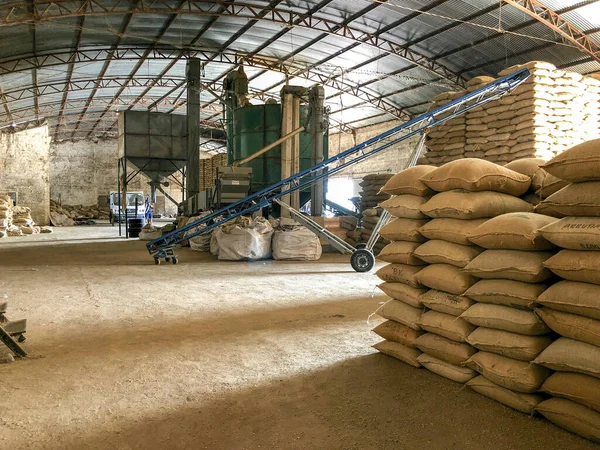
A mash plant needs a crusher, a mixer and a bagging line. A pellet line adds a pellet mill and a cooler.
Feed mill equipment and what it does
| Machine | Job |
|---|---|
| Feed crusher | Grinds raw materials into fine particles |
| Feed mixer | Blends ingredients evenly |
| Pellet mill | Presses the mix into pellets |
| Cooling system | Cools pellets after processing |
| Packaging machine | Packs the finished product |
| Storage bins | Hold raw materials and finished feed |
Good machinery cuts downtime and raises profit.
Mixers list from KSh 79,500 to KSh 350,000 (Ecochicks). A 12 tonne an hour mash plant costs about US$720,000, says supplier Richi. That is about KSh 93 million at KSh 129 to the dollar, and industrial scale. A small mill of 1 tonne an hour needs about KSh 3,000,000 by our estimate.
Licences required to start an animal feed business in Kenya
Licences and permits for an animal feed business
| Licence or permit | Cost | What it does |
|---|---|---|
| Business registration | KSh 1,000 for a business name. KSh 30,000 for a limited company | Registers your business with the Registrar of Companies |
| Single business permit | From about KSh 8,000 | County permit to operate in your area |
| Food handling medical certificate | KSh 600 | Shows food handlers are fit to handle food |
| Food hygiene certificate | From KSh 300 | Issued after a health inspection of hygiene standards |
| Fire safety certificate | About KSh 3,000 | Checks fire safety, including extinguishers |
| Health inspection certificate | About KSh 7,000 | A health officer inspects safety and cleanliness |
| KEBS licence | About KSh 20,000 | Quality assurance licence for producing animal feed |
| Fertilizers and Animal Foodstuffs Board | Ask the Board | The Board can license manufacturers, distributors and retailers of animal foodstuffs |
Costs are from our earlier guide and vary by county. A limited company pays about KSh 68,900 across the listed items. The Board role is from the Amendment Act 2015. Confirm each fee with the issuing office.
Mill economics per tonne: a 2,000 tonne a year mill
We priced a mash mill that sells 2,000 tonnes a year ex-factory at KSh 46,000 a tonne. That is a KSh 3,500 retail bag less an agrovet margin of about 8% (our assumption). Raw materials cost KSh 40,000 a tonne in a by-product blend.
Unit economics of a 2,000 tonne mill
| Line | KSh a tonne |
|---|---|
| Ex-factory sale price | KSh 46,000 |
| Raw materials (blended recipe) | -KSh 40,000 |
| Bags (KSh 30 a bag) | -KSh 430 |
| Labour | -KSh 900 |
| Power | -KSh 500 |
| Transport and delivery | -KSh 1,200 |
| Maintenance | -KSh 300 |
| Licences and lab tests | -KSh 250 |
| Credit loss and spoilage (1% of sales) | -KSh 460 |
| Net profit a tonne | KSh 1,960 |
| Net profit a year (2,000 tonnes) | KSh 3.9 million |
Planning figures. Your own quotes for bags, power and labour will move these.
Mill cases: what moves the profit
| Case | Net a tonne | Net a year |
|---|---|---|
| Weak: raw materials up 5% | About break-even | About break-even |
| Weak: sale price down 3% | KSh 580 | KSh 1.2 million |
| Base case | KSh 1,960 | KSh 3.9 million |
| Good: raw materials down 5% | KSh 3,960 | KSh 7.9 million |
Maize is about 40% of a standard mix. A KSh 5 a kilo rise in maize adds about KSh 2,000 a tonne to cost.
A mill earns by volume and by buying maize well. A small price swing can wipe out the margin.
Capital needed for a 2,000 tonne mill
| Item | Amount |
|---|---|
| Equipment and installation | About KSh 3,000,000 |
| Licences and registration | About KSh 68,900 |
| Stock: 45 days of raw materials | KSh 10.0 million |
| Total | KSh 13.1 million |
| Payback at base case | About 3.3 years |
Credit to agrovets can add more working capital than the stock itself.
How to maximise profit in a feed business
- 1Optimise the formula. Use cost-effective, nutritious ingredients. Formulation software helps.
- 2Scale up. Serve more clients, or export to Uganda and Tanzania, to cut cost a tonne.
- 3Focus on quality. Better feed gives better animal output. That builds loyal customers.
- 4Offer extras. Delivery, bulk discounts and nutrition advice win repeat buyers.
Steps to start an animal feed milling business
- 1Research the market. Pick your target: smallholders or large dairy, poultry and livestock operations.
- 2Write a business plan. Set objectives, product range, capacity and financial projections.
- 3Secure funding. Use savings, loans or investors.
- 4Register and get permits. Register the business and apply to KEBS and the Board.
- 5Buy equipment. Get a mill, a mixer and a bagging line, plus storage for stock.
- 6Source raw materials. Set up a steady supply of maize, soya and fishmeal of consistent quality.
- 7Start production. Monitor quality batch by batch.
- 8Market your feed. Use social media, a website and agricultural shows.
Should You Mix Your Own Feed or Start a Feed Business? Check the Constraints First
Go ahead if
- 1Your recipe beats the bag price after additives and labour
- 2You can buy maize in bulk at harvest
- 3You have a dry store and a scale
- 4You keep a batch log and a retained sample
Wait if
- 1You feed a few animals and buy single bags
- 2Your recipe leans on fishmeal and soya
- 3You have no way to test protein or aflatoxin
- 4You plan to sell before you hold the licences
Constraints to check
| Constraint | Check | If it fails |
|---|---|---|
| Price | Cost the recipe with your supplier quotes | Buy the bag or change the recipe |
| Ingredient supply | Soya, maize germ and cakes can run short | Use a second recipe built on other inputs |
| Quality | Mould, aflatoxin and wrong weights | Dry grain, weigh, test |
| Capital | Stock for a month and a mixer | Start with a home mix |
| Licence | Selling feed needs permits and the Board | Mix only for your own animals until licensed |
What Nobody Tells You About Homemade Feed and Feed Mills
- 1Savings depend on the recipe. Fishmeal and soya recipes can cost as much as the bag.
- 2Protein can be too high or too low. A published recipe can miss its target. Check it.
- 3Mixing is a skill. Poor mixing leaves some animals with too little of a premix.
- 4Moulds are invisible. Damp maize carries aflatoxin before you see mould.
- 5Mills run on thin margins. One bad maize buy can erase a year of profit.
- 6Credit eats working capital. Agrovets pay late. Your stock is tied up.
Reality check
Advice
- 1Homemade feed always saves 30 to 50%
- 2A mill earns most of its sales as profit
- 3Any recipe works if the bag is full
Reality
- 1Only when the recipe uses cheap by-products and you buy in bulk
- 2Our model nets about 4% after raw materials, bags, labour and credit loss
- 3Protein, minerals and weight must match the stage of the animal
Questions Readers Ask About Homemade Feed and the Feed Business
Is homemade animal feed cheaper than buying a bag?
It can be. At our planning prices, a dairy ration costs about KSh 2,780 per 70 kg. A bag costs near KSh 3,400. A layers mash heavy on fishmeal and soya costs about the same as the bag.
What is feed formulation?
It is mixing ingredients to meet an animal's nutrient target at the lowest cost. You set protein and energy needs, then pick local ingredients that supply them.
What is a Pearson square?
It is a simple method to mix two ingredients to a protein target. For 18% protein, mix 24.3 kg of soya with 75.7 kg of maize.
Can I substitute ingredients in a recipe?
Yes, if protein stays high enough. If fishmeal is too dear, try meat meal or groundnut cake. Keep protein high for chicks and broilers.
How do I know my chickens get enough nutrients?
Watch the flock. Healthy birds have shiny feathers, bright eyes and active behaviour. Layers show it in steady laying and strong shells.
Can I sell the feed I make?
Yes, if it meets the nutrient needs of the animal. Check local rules first. The Fertilizers and Animal Foodstuffs Board can license manufacturers and retailers.
How do I store homemade feed?
Store it in a cool, dry place in sealed containers or drums. Mix only one or two weeks of feed at a time to keep it fresh.
How much protein do layers need?
Layer chicks need about 18 to 20%. Growers need 16 to 18%. Laying hens need about 16 to 18% plus more calcium for shells.
How much does a 70 kg bag of feed cost in Kenya?
A 70 kg bag of dairy or layers feed averages about KSh 3,500 in 2026. Layers mash ranges from about KSh 3,150 to KSh 5,000 by brand and shop.
How much should I feed weaner, porker and baconer pigs?
Start weaners at 200 g a day and add 50 g daily. Porkers reach 1.4 kg by 14 weeks, in three meals. Baconers eat 2.5 to 3 kg.
Is poultry litter safe in a dairy ration?
Only in small amounts. Use dried litter at up to 10% of a lactating cow ration. Drug residues from poultry can reach the milk.
How does a cooperative mix feed?
Members buy ingredients in bulk, share one mixer and store, and log every batch. A store keeper, an operator and a quality officer run it.
How much does a small feed mixer cost?
A 100 kg mixer lists at KSh 79,500. A 500 kg an hour mixer lists at KSh 200,000. A 1,000 kg an hour mixer lists at KSh 350,000.
Which licences does a feed business need?
You need business registration, a county permit, health and fire certificates and a KEBS licence. Ask the Fertilizers and Animal Foodstuffs Board about manufacturer licensing.
How profitable is a feed mill?
In our model a 2,000 tonne a year mill nets about KSh 2,000 a tonne. Thin margins make maize buying and credit control the main risks.
Ready to cost your own feed?
Tell us your animals, herd size and ingredient prices. A farm adviser replies within one working day.
Written by Agcenture
We help farmers and agribusinesses across Kenya plan farms, grow profitably and reach markets. Our guides use public sources and field experience.