In this article
Key takeaways
- Farmers estimate 36 per cent of stored maize is lost to pests.
- Dry grain to 13.5 per cent moisture or below.
- A 100 kg hermetic bag costs KSh 250 to 290.
- Hermetic bags keep grain for up to two years.
- Metal silos suit 10 bags and more.
- Keep every container off the floor and under a roof.
Farmers in Kenya’s maize zones estimate they lose 36 per cent of what they store.
On a mid-November 2026 bag, that is KSh 1,591 gone to weevils and borers.
This guide covers drying, hermetic bags, silos and cocoons, then rates twelve other methods. It ends with shop storage.
Dry the grain to 13.5 per cent moisture or below, and sort out damaged kernels. Seal it in a hermetic bag, which costs KSh 250 to 290 for 100 kg. Stack bags on pallets under a roof. For 10 bags or more, consider a metal silo.
How Much Grain Kenya Loses in Storage
Farmers put their maize storage losses at about 36 per cent. Weevils and the larger grain borer do most of it.
The estimates come from group discussions across Kenya’s six maize zones (CIMMYT study).
Mould is the quieter loss. Damp grain develops aflatoxin, a poison no cooking removes.
Aflatoxin can rise sharply in ordinary woven bags, even in grain dried below 13.5 per cent (USAID).
What One Unprotected Bag Costs You
At a 36 per cent loss, a KSh 4,419 bag of maize loses KSh 1,591. A hermetic bag costs KSh 250 to 290.
Bag prices are retail listings (PICS, AgroZ Plus). The maize price is the national average for 15 November 2026 (WRSC).
The 36 per cent is a farmer estimate for all storage pests. Your loss may be lower.
A hermetic bag is reused for several seasons, so its cost a season is lower still.
Dry it properly, seal out the air, and keep it off the floor. That is the whole method.
How to Store Cereals and Pulses: Dry Them First
Dry maize to 13.5 per cent moisture or below before it goes into any container. Beans need about the same.
- 1Dry on a tarpaulin or raised rack.Never on bare soil, where mould spores live.
- 2Turn the grain through the day.Cover it before dusk and when rain threatens.
- 3Sort out the bad grain.Remove broken, mouldy and insect-damaged kernels.
- 4Test the moisture.Use a moisture meter, or the salt-and-bottle test.
- 5Cool before sealing.Warm grain sweats inside a closed container.
For the salt test, shake dry salt and grain in a dry glass bottle. Salt sticking to the glass means the grain is still damp.
Do not mix batches dried to different levels.
The Best Storage Method for Your Scale
Food containers at home, and hermetic bags for up to about 50 bags. Use silos or cocoons beyond that.
Airtight food containers
For 1 to 50 kg of rice, beans and flour.
Hermetic bags
About KSh 250 each. No chemicals needed.
Hermetic bags or a metal silo
A silo saves space and lasts for years.
Hermetic bags and metal bins
Bags for reserve stock; bins for the selling floor.
Hermetic cocoons
Sealed covers over stacks of ordinary sacks.
Hermetic bags
Sealed, dry storage protects germination.
Three Ways to Seal Out Air
Hermetic bags for the farm and shop, and steel canisters for the store room. Plastic containers suit the kitchen.

Hermetic bags
PICS, AgroZ, GrainPro, ZeroFly and Elite bags. Inner plastic liners inside a woven sack.

Steel canisters and bins
Rodent-proof and long-lasting. Keep them shaded and off the floor.

Airtight food containers
Clear sides show the contents. Good for flour, rice, beans and ndengu.
Hermetic Bags: How They Work, and What They Cost
Two plastic liners inside a woven sack starve insects of oxygen. A 100 kg bag costs KSh 250 to 290.
- Step 1Check the liners.Hold each to the light and look for holes.
- Step 2Fill with dry, cool grain.Shake down to push out air pockets.
- Step 3Twist and tie each liner.Fold the twist over and tie it tight, one liner at a time.
- Step 4Tie the outer sack.Stack on pallets, away from walls.
- Step 5Open as little as possible.Each opening lets oxygen back in.
Grain keeps for up to two years in hermetic bags, with its cooking quality intact (TAAT).
In a Kenyan trial, hermetic devices held aflatoxin down better than woven bags (University of Arizona). That held at both moisture levels tested.
Rodents can chew through bags. Keep the store clean and set traps.
Brands sold in Kenya include PICS, AgroZ, GrainPro, ZeroFly and Elite. Follow each maker’s instructions.
Metal Silos and Bins: Twenty Years of Storage
A sealed, galvanised steel silo keeps out insects, rodents and damp. Sizes run from 100 kg to over a tonne.
Local artisans make them from galvanised sheet, soldered airtight, with a filling lid and a side outlet.
Stand the silo on a wooden platform at least 15 cm high, under a roof.
Fill it with clean, dry grain and seal both lids with rubber bands.
One Kenyan study priced a 350 kg metal silo at about US$144 (2017 study). A plastic one cost about US$92. Prices have since changed.
Hermetic Cocoons for Traders and Stores
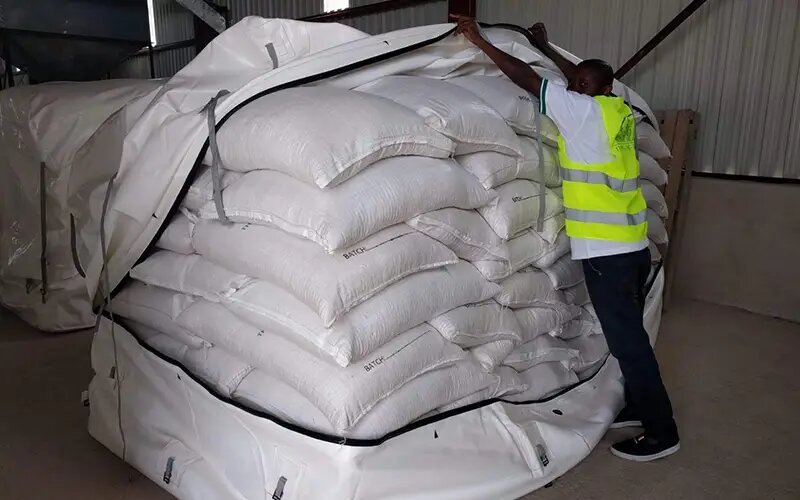
A cocoon is a zipped, airtight cover over a whole stack of ordinary sacks. It holds five tonnes and upward.
It works like a hermetic bag, at warehouse scale.
It suits wholesalers, cooperatives and school stores that hold grain for months.
Get a supplier’s quotation; prices vary with size.
Ash, Neem, Sand and Ten Other Methods, Rated
Traditional methods cost little and help. None seals out air, so use them alongside a closed container.
Table: Other storage methods
Other storage methods
| Method | How it works | Our rating | Best for |
|---|---|---|---|
| Wood ash | Mixed with grain at about 1 part to 10; dries and deters insects | Medium | Home food stocks |
| Dried neem leaves | Layered through the grain; repels insects | Medium | Home food stocks |
| Dry sand | Fills the gaps insects move through | Medium | Small seed lots |
| Raised granary | Lifts grain off damp ground; airy | Medium | Cobs and unshelled grain |
| Smoke | Stored above the cooking fire | Medium | Seed cobs |
| Solar heating | Grain heated under plastic in full sun before storage | Medium | Pre-treatment |
| Diatomaceous earth | Food-grade powder that dries out insects | High | Farm and shop stocks |
| Plastic drums and jerricans | Airtight if the lid seals | High | 15 to 180 kg lots |
| Vacuum packs | Air removed by machine | High | Seed and premium packs |
| Cold rooms | Cool air stops insects breeding | High | Seed companies and exporters |
| Nitrogen or carbon dioxide flushing | Replaces the oxygen in a sealed store | High | Large, specialised stores |
| Underground pits | Sealed pits in dry ground | Low | Emergencies in arid areas |
Ratings are our judgement, not trial results.
Wash ash-treated grain before cooking. Wear a dust mask when mixing any powder.
Use only food-grade drums. Never reuse a chemical or fuel container.
Storing Stock in a Cereal Shop
Pallets, a dry floor, first-in-first-out and a weekly check for weevils.
Do this
- 1Stack bags on pallets, off walls
- 2Sell the oldest stock first
- 3Sieve a sample from each bag weekly
- 4Keep reserve stock in hermetic bags
Avoid this
- 1Buying damp grain at a discount
- 2Stacking new stock on old
- 3Storing grain beside paraffin or soap
- 4Spraying household insecticide on food
Rent, margins and break-even are in the cereal business in Kenya.
What to stock is in the most profitable cereals in Kenya.
Store at Harvest, Sell in the Lean Months
Safe storage lets you choose when to sell. Prices are lowest at harvest and rise as stocks run down.
That price gain is the return on a KSh 250 bag.
Count the cost of cash tied up for months before you hold stock.
Sell in lots, not all at once. Nobody times the peak.
Dry it properly, seal out the air, and keep it off the floor. That is the whole method.
Planning a storage or grain trading project?
Agcenture prepares feasibility studies, business plans and training on post-harvest handling. Tell us your volumes and location.
Written by Agcenture
Agcenture helps Kenyan farmers and food businesses plan, finance and grow. Our guides use public sources and clearly labelled assumptions.
Questions readers ask
What is the best way to store cereals and pulses?
Dry them to 13.5 per cent moisture or below. Then seal them in hermetic bags or airtight containers.
How much is a hermetic bag in Kenya?
About KSh 250 to 290 for a 100 kg bag.
How long can cereals be stored?
Up to two years in hermetic bags, if the grain went in dry.
How do you store maize without chemicals?
Dry it well, sort it and seal it in a hermetic bag or metal silo.
Which cereals and pulses store longest?
Dry maize, beans, green grams, sorghum, millet and rice all store well when dry and sealed.
How much grain should a family of four store?
About 32 kg of maize a month, at roughly 8 kg a person.

I want to construct a farm tool storage cum cereal store. Can you advise.