In this article
Key takeaways
- An 8×15 m greenhouse costs KSh 90,000 to 170,000 in wood, or KSh 180,000 to 290,000 in metal.
- One six-month crop costs about KSh 151,000 on our model.
- The crop breaks even near KSh 32 a kilo at the farm gate.
- Tomato grosses the most per crop. Strawberries, coloured capsicum and herbs need a premium buyer.
- Price at harvest, soil disease and water decide the outcome.
In January 2026 farmers sold tomatoes for KSh 300 a crate. By April the same crate was scarce at many times that.
A greenhouse lets you choose which of those months you harvest in. It does not guarantee you choose well.
This guide gives greenhouse prices and the cost of a crop. It shows the price you need to make money.
A metal 8×30 m greenhouse with its first crop costs about KSh 560,000. One tomato crop costs about KSh 151,000 and yields about 4,800 kg on our model. You break even near KSh 32 a kilo. At KSh 50 a kilo the crop leaves about KSh 89,000.
Who Buys Greenhouse Produce?
Wholesale traders, hotels, supermarkets and mama mbogas. Hotels and supermarkets pay for steady quality.
Crates sold through brokers
Fast sales at the day’s price, good or bad.
Graded produce on a schedule
Better prices for growers who deliver weekly.
Direct sales at the farm gate
Small volumes, cash and no transport cost.
Retail tomatoes rose from KSh 99.60 a kilo in March 2026 to KSh 108.60 in April (a university blog, citing KNBS).
In the January glut, farm-gate prices fell to KSh 300 to 500 a crate (The Star).
A greenhouse earns its cost when it harvests during shortages, not gluts.
For traders’ view of the same swings, see our tomato farming guide.
How Much Does It Cost to Set Up a Greenhouse in Kenya?
An 8×15 m greenhouse costs KSh 90,000 to 170,000 in wood. Metal costs KSh 180,000 to 290,000, and an 8×30 m metal house KSh 340,000 to 500,000.
See all 12 supplier prices and sources
Greenhouse prices in Kenya, 2026 (KSh, supplied and installed)
| Size and frame | Price | Source |
|---|---|---|
| 8×15 m, wooden | 90,000 | Graduate Farmer |
| 8×15 m, wooden | 140,000 | Grekkon |
| 8×15 m, wooden | 165,000 | Aqua Hub |
| 8×15 m, wooden | 169,900 | Hortitechno, September 2026 |
| 8×15 m, metal | 180,000 | Graduate Farmer |
| 8×15 m, metal | 240,000 | Aqua Hub |
| 8×15 m, painted metal | 252,875 | Hortitechno, September 2026 |
| 8×15 m, galvanised steel | 292,500 | Hortitechno, September 2026 |
| 8×24 m, greenhouse | 360,000 | Irrihub shop listing |
| 8×30 m, wooden | 190,000 to 247,700 | Grekkon; Hortitechno |
| 8×30 m, metal | 340,400 to 365,000 | Hortitechno; Aqua Hub |
| 8×30 m, galvanised steel | 496,000 | Hortitechno, September 2026 |
Published supplier prices, not quotes. Check what each includes: drip kit, tank, soil test and transport. Get three written quotes.
The spread between suppliers is wide. The cheapest wooden quote is nearly half the dearest.
Three things explain most of it: frame grade, cover thickness and whether a tank is included.
Wood lasts four to eight years and metal fifteen or more, by one supplier’s estimate.
The polythene cover wears out first. Replacing it on an 8×30 m house costs KSh 40,000 to 80,000 (Aqua Hub).
Our model uses a metal 8×30 m house at KSh 350,000, inside the quoted range.
The Four Types of Greenhouse You Will Be Offered
Wooden tunnels, metal tunnels, multi-span houses and net houses. All four exist to control rain, pests and temperature around the crop.
Wooden tunnel
Treated poles under polythene. Cheapest to build, shortest lived.
Metal tunnel
Painted or galvanised steel hoops. Lasts longer and resists wind.
Multi-span house
Several bays joined at the gutter, with roof vents. For commercial blocks.
Net or shade house
Insect net or shade cloth, not polythene. Cooler, for hot lowlands.
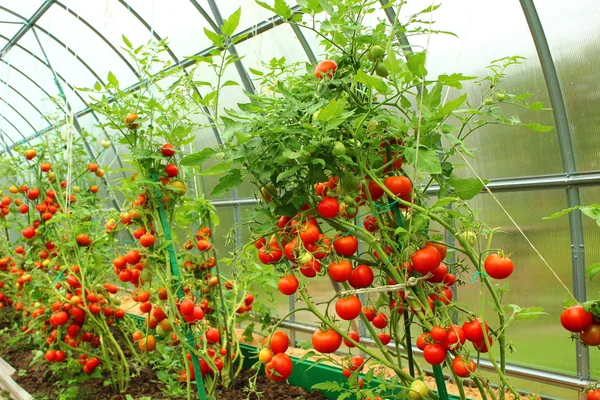
A greenhouse is a covered structure that controls temperature, humidity and pests around a crop.
Covers come in glass, rigid polycarbonate and polythene film. Almost every Kenyan farm house uses polythene.
Kenyan greenhouses are unheated. Their job is to keep rain off the leaves and insects off the crop.
Dry leaves mean less blight. A netted, closed house means fewer sprays.
Altitude decides the type. Cool highlands need the warmth of polythene, and hot areas need more vents or net.
Most first-time growers start with a tunnel on a quarter acre or less.
Small-Scale and Low-Cost Greenhouses: How Cheap Can You Go?
Small plastic tunnels are listed from about KSh 35,000. A wooden 8×15 m house built with your own poles starts near KSh 90,000.
Save here
- 1Use treated poles from your own farm
- 2Start with an 8×15 m house
- 3Hire a local fundi with a supplier’s plan
- 4Buy a drip kit sized to the house
Never save here
- 1Cover: UV-treated, 200 microns
- 2Insect net on every vent and door
- 3A soil test before building
- 4A double door with a footbath
The cheapest listings are small plastic tunnels (Hortitechno). They suit seedlings and kitchen crops.
One builder’s rule is worth keeping: UV-treated polythene, 200 microns thick (Nation).
Used greenhouses are rare. One marketplace showed six used listings among 780 greenhouse adverts (Jiji).
If you buy used, pay for the steel frame only. Budget for a new cover, new net and new drip lines.
We found no public 2026 price list for Amiran Kenya. Request a written quote through its greenhouse page.
What Is the Most Profitable Crop to Grow in a Greenhouse?
Tomato grosses the most per crop among the staples. Strawberries, coloured capsicum and herbs earn more per kilo, if you have the buyer.
Tomato, hybrid

- Season
- 3 to 4 months
- Yield
- 3,000 to 5,000 kg
- Farm-gate price
- KSh 30 to 80 a kilo
Capsicum, green

- Season
- 4 to 6 months
- Yield
- 800 to 1,500 kg
- Farm-gate price
- KSh 60 to 120 a kilo
Cucumber

- Season
- 2 to 3 months
- Yield
- 2,000 to 4,000 kg
- Farm-gate price
- KSh 20 to 45 a kilo
Roses, cut flowers

- Season
- Continuous
- Yield
- 3,000 to 6,000 stems a month
- Farm-gate price
- KSh 8 to 25 a stem
French beans

- Season
- 2 to 3 months
- Yield
- 500 to 900 kg
- Farm-gate price
- KSh 40 to 80 a kilo
Lettuce and baby greens

- Season
- 4 to 6 weeks
- Yield
- 200 to 400 kg
- Farm-gate price
- KSh 80 to 150 a kilo
For an 8×15 m house. Ranges from one 2026 guide. Gross sales are our mid-range arithmetic, not profit.
Short crops repeat, so one crop is not one year.
Lettuce can turn eight times a year, and cucumber four. Tomato manages two or three.
Roses look strong on paper. They need export contracts, cold storage and skilled labour.
Six more greenhouse options
Coloured capsicum
 KSh 150 to 300 a kilo
Red and yellow peppers for hotels, supermarkets and export (Huduma Global).
Strawberries
 KSh 250 to 500 a kilo
Farm-gate price to upmarket buyers. Perishable, and labour is heavy (Huduma Global).
Culinary herbs
 Basil, rosemary, rocket
Restaurants, supermarkets and exporters buy small, steady volumes (Huduma Global).
Kale and spinach
 Daily cash, low price
They sell every day, but rarely repay the cost of a cover.
Melons
 Heat-loving vine crop
Trained up strings like cucumber. Test your market before planting a full house.
Seedlings
 A service, not a crop
A propagation house sells trays to other farmers. See where growers buy seedlings.
One Kenyan farm guide names flowers, tomatoes, cucumbers, herbs, lettuce, pepper and strawberries as top earners (The Standard).
High price per kilo is not the same as high profit. Premium crops need a named buyer first.
Without that buyer, grow tomato. The market is deep, and every trader knows the crop.
Greenhouse tomato varieties have a yield potential of 9 to 15 kg a plant (KALRO).
Compare varieties in our guide to tomato varieties in Kenya.
Crop management is covered in greenhouse tomato farming in Kenya.
Rotate crops. Tomato after tomato builds up wilt and nematodes in the soil.
Is Greenhouse Farming Profitable in Kenya?
It depends on the price you sell at. Our model breaks even at about KSh 32 a kilo and leaves KSh 89,000 at KSh 50.
One greenhouse tomato crop at three prices (KSh, our model)
| Farm-gate price a kilo | Gross sales | Crop costs | Left from the crop |
|---|---|---|---|
| 20 | 96,000 | 151,000 | -55,000 |
| 50 | 240,000 | 151,000 | 89,000 |
| 80 | 384,000 | 151,000 | 233,000 |
One six-month crop. The result is before the owner’s pay, tax and loan repayments.
One 2026 guide puts farm-gate prices at KSh 30 to 80 a kilo (a 2026 guide). A producer price series shows about KSh 42 (Selina Wamucii).
At KSh 20 the crop loses money. That was the price in the January 2026 glut.
The KSh 151,000 crop budget is itemised in greenhouse tomato farming in Kenya.
Monthly tomato prices are tracked in tomato farming in Kenya.
Gross sales are not profit. Plan your planting date around expected shortages.
The best months to sell shift each year with rain and drought.
A greenhouse controls the weather. It does not control the price.
What It Costs to Start, at Three Levels
About KSh 150,000 for a wooden 8×15 m house and its first crop. A metal 8×30 m house needs about KSh 560,000.
The structure and a first crop of 300 plants.
- A learning unit on a small plot
- Wood lasts four to eight years
- Sells at the gate and to traders
The structure, a tank and a first crop.
- About 600 tomato plants
- Supplies hotels or a supermarket
- Breaks even near KSh 32 a kilo
Several houses with shared irrigation.
- Staggered planting for weekly harvests
- A full-time farm manager
- Contracts with larger buyers
Budget for a metal 8×30 m greenhouse (KSh)
| Item | Budget | Basis |
|---|---|---|
| Metal greenhouse, 8×30 m, with drip kit | 350,000 | Inside 2026 supplier prices of KSh 340,000 to 496,000. |
| First crop running costs | 126,000 | Itemised in our greenhouse tomato guide; excludes wear. |
| Tank, 5,000 litres, and stand | 45,000 | Our estimate. |
| Soil test, beds and manure | 20,000 | Our estimate. |
| Sprayer, tools and crates | 19,000 | Our estimate. |
| Total | 560,000 | Our example. Yours will differ. |
Choosing the Site and Securing Water
Level ground, full sun, wind protection and water every day. A 240 m² house needs about 500 litres a day.
- 1Test the soil first.Wilt and nematodes decide success. See soil testing in Kenya.
- 2Secure water.Half a litre a plant a day is a common planning figure.
- 3Face the wind sensibly.Orient the house so vents catch the breeze.
- 4Plan drainage.Run-off must not enter the house.
- 5Choose a pump.Compare options in our guide to irrigation pump types.
The Problems That Empty Greenhouses
Bacterial wilt, nematodes, whitefly and the tomato leafminer. Most arrive with soil, seedlings or visitors.
Prevent
- 1Disinfectant footbath at the door
- 2Insect netting kept intact
- 3Certified seedlings only
- 4Resistant or grafted varieties
Act early
- 1Remove wilted plants at once
- 2Use sticky traps and scout twice weekly
- 3Rotate chemical groups
- 4Grow in bags if soil is infected
A greenhouse is warm and humid, so pests multiply faster inside than outside. Hygiene is daily work.
Selling for More Than the Market Price
Grade the fruit and deliver on fixed days. Agree a price range with a buyer before you plant.
- 1Visit three buyers before planting.Ask what variety, size and volume they want.
- 2Agree a price band.A floor and a ceiling protect both sides.
- 3Grade into two classes.Top grade to hotels, the rest to traders.
- 4Deliver on fixed days.Reliability earns the next order.
- 5Stagger planting.Two smaller houses give more harvest weeks than one large one.
Surplus can be dried or made into paste. See value addition business ideas.
What Are the Disadvantages of Greenhouse Farming?
High start-up cost, fast-spreading pests, soil disease, a cover that wears out, and prices you cannot control.
- 1The money goes in first.A metal 8×30 m house can cost more than its first two crops return.
- 2Pests breed faster inside.Warmth and humidity suit whitefly and leafminer as well as tomatoes.
- 3Soil gets sick.Wilt and nematodes build up by the second season without rotation.
- 4The cover is a repeat cost.Sun and wind wear out polythene every few years.
- 5It needs daily skill.Pruning, scouting and feeding cannot wait for the weekend.
- 6The market still decides.A perfect crop sold in a glut loses money.
Do this
- 1Plan harvest for shortage months
- 2Test soil and rotate crops
- 3Store a week of water
- 4Keep records of every spray and harvest
Avoid this
- 1Believing supplier yield promises
- 2Planting when everyone else plants
- 3Skipping the footbath and netting repairs
- 4Borrowing against best-case prices
A greenhouse controls the weather. It does not control the price.
How to Start
Find the buyer and the water first, test the soil, then build.
Visit two working greenhouses and ask what failed in their first year.
Start with one house. Add the second when the first has paid for a crop.
Put price scenarios into a plan with our farm business plan guide.
Structures are commonly financed. Compare options in how to get farm loans in Kenya.
Planning a greenhouse investment?
Agcenture prepares crop budgets, market checks and financing plans for horticulture. Tell us your site and crop.
Written by Agcenture
Agcenture helps Kenyan farmers and food businesses plan, finance and grow. Our guides use public sources and clearly labelled assumptions.
Questions readers ask
Is greenhouse farming profitable in Kenya?
It depends on price. Our tomato model breaks even near KSh 32 a kilo. It leaves KSh 89,000 a crop at KSh 50.
How much does it cost to set up a greenhouse in Kenya?
An 8×15 m house costs KSh 90,000 to 170,000 in wood. Metal costs KSh 180,000 to 290,000 on 2026 supplier prices.
What is the most profitable crop to grow in a greenhouse?
Tomato grosses the most per crop among staples. Strawberries, coloured capsicum and herbs pay more per kilo with a buyer.
What are the disadvantages of greenhouse farming?
High start-up cost, fast-spreading pests, soil disease, cover replacement and price risk.
What are the four types of greenhouses?
In Kenya you will be offered wooden tunnels, metal tunnels, multi-span houses and net houses.
What is the purpose of a greenhouse?
It keeps rain and insects off the crop and steadies temperature. That allows harvests in off-season months.
How many tomato plants fit in an 8×30 m greenhouse?
About 600, at roughly 2.5 plants a square metre. Suppliers often quote more.